
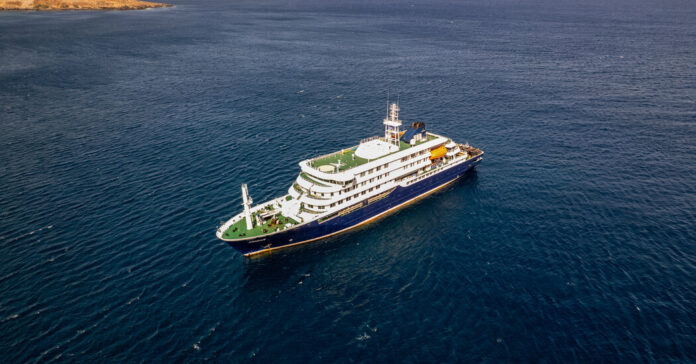

The MV Hondius, the vessel at the center of a hantavirus outbreak, is no ordinary cruise ship. It does not have a round-the-clock bar or buffet service, according to passengers who have sailed on it before.
There are no swimming pools or hot tubs on deck. Sometimes, there are sniffer dogs to make sure passengers don’t bring contaminants on board when they go on shore to sensitive ecosystems. Other times, there are sanitized rubber boots.
None of that was enough to protect the ship from the hantavirus, a rare family of viruses carried by rodents. So far, three of its recent passengers have died and five others are showing symptoms, according to the World Health Organization. Health officials in a growing list of countries are scrambling to trace people who may have been exposed to the virus after the ship set sail in Argentina in early April, stopping at islands in the south Atlantic Ocean.
The vessel was ferrying about 150 people, including 88 passengers and 61 crew members.
“I just couldn’t believe it happened on this ship because they’re ridiculously strict,” said Dave Wilson, who sailed on the MV Hondius with his son this year.
Oceanwide Expeditions, the vessel’s owner, said it could not immediately respond to a request for comment.
Several former MV Hondius passengers said the ship did not dock at ordinarily crowded tourist destinations. It catered to passengers who wanted an educational experience, especially wildlife enthusiasts. It was also costly; passengers said they paid around $8,500 to $17,000 per cruise.
The guides are often experts in their fields, including biodiversity and geopolitics, and give lectures in between shore visits, passengers said.
“It’s a no-frills ship,” said Akvile Marozaite, chief executive of Expedition Cruise Network, an industry group, who spent three days on the MV Hondius on a short trip around the British Isles about a year ago. “Typically, it attracts a different type of traveler.”
The staff also take precautions to prevent contamination of the ship and the islands those on board visit, former passengers said. Before boarding the MV Hondius in Ushuaia, Argentina, Mr. Wilson said, he saw sniffer dogs make their way through the ship.
As they sailed from the Falkland Islands to the South Georgia islands in the South Atlantic Ocean and around the Antarctic Peninsula, he said, crew members tried not to contaminate the ecosystems they visited. Mr. Wilson and another passenger said they had been given sanitized rubber boots to walk on designated paths on the islands.
Guides kept watch to make sure they maintained a distance from the penguins, seals and other wildlife. Their backpacks had to be deposited on a tarpaulin on shore so that nothing they brought with them made contact with the ground, they said.
Before the passengers got back on board, the crew checked their clothing, making sure there were no seeds stuck in the seams to reduce the risk of carrying invasive species, Mr. Wilson said. They also had to wade through an antibacterial solution before taking their boots off, he added.
“The biosecurity protocols were rock solid,” he said in an interview
Although human-to-human transmission of the hantavirus is rare, W.H.O. officials confirmed that the Andes strain that has infected patients from the ship is the only species known to spread among humans.
Among those who died were a couple from the Netherlands who had shared a cabin, officials said. The couple joined the cruise in Argentina, and health officials say they believe they were infected before boarding the ship. A third person, a German woman, died on board nearly three weeks after the first death.
The MV Hondius is smaller than a luxury cruise ship, and passengers said they interact in the dining hall, the lounge and in the lecture theater. Former passengers said that to reach islands on their itinerary, they were ferried in groups of 10 or more by inflatable boats. Crew members regularly mixed with guests, sometimes answering questions about rare wildlife over meals.
“It was one of the best journeys of my life,” recalled Augusto Gomes, a Brazilian wildlife videographer who said he had been hired by Oceanwide Expeditions to shoot videos.
“I think they were just unlucky,” he said of those who became sick and their fellow passengers. “It could happen to any ship.”
Barbara Kosabek Williams has been on two trips with Oceanwide Expeditions, once to the Antarctic and to the Arctic.
She insists on calling the vessel an expedition ship and not a cruise ship. Ms. Kosabek Williams, 66, used to work in a medical laboratory in anatomical pathology. She said she was impressed by the hygiene protocols on the ship, as well the medical facilities on board.
Ms. Kosabek Williams said she had been in contact with some of the people currently on board the vessel, which as of Friday was making its way from Cape Verde to the Canary Islands. “Everybody seems to be OK,” she said.
The outbreak has not deterred her from planning her third voyage on the MV Hondius. This time, to the Balkans.