
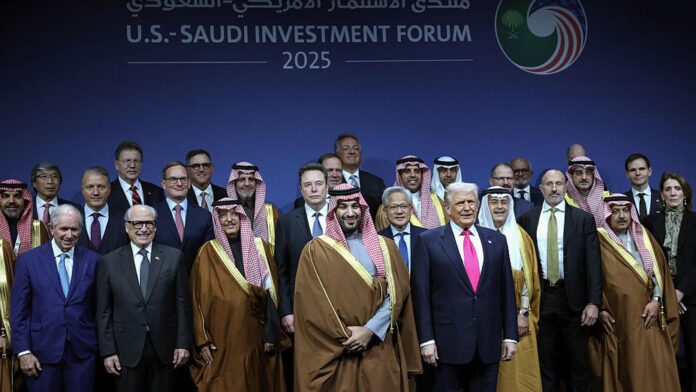

The war has also clarified what the next phase of Gulf development requires. In the near-term, the region may need the armored-car version of economic transformation rather than the sports-car version; it needs to trade top speed for additional safety, but to arrive at the same destination. That means hardened infrastructure, redundant logistics, jointly developed air and missile defenses, more resilient energy systems, and upgrades to pipelines, ports, rail, and trade routes. That agenda should interest Washington.
For American companies, the Gulf market has already expanded to include new industries from quantum computing to mining to manufacturing. As Gulf states work to harden what they have built and build what they lack, American firms can help. But Gulf states will notice who left and who returns. To succeed, American businesses must show commitment.
Despite Iran’s targeting of American data centers in the Gulf, artificial intelligence, which was last May’s centerpiece, remains a significant opportunity. American tech companies and Gulf governments have been exploring ambitious joint projects. These now require creative thinking about security and redundancy, but the basic case remains. If the U.S. wants to lead the AI era globally, it should ensure that Gulf capital and infrastructure are tied to American technology, safeguards, and standards.