
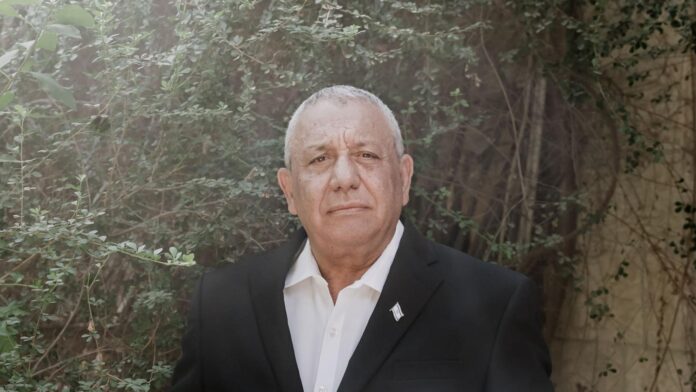

For Eisenkot, the challenge is not merely to replace Netanyahu but to lead Israel beyond the trauma that has consumed it since Oct. 7. He sees a country caught between the imperative to protect itself and the need to recover the democratic values, national solidarity, and international legitimacy that are essential to its survival. “I feel like it’s a historic mission—to save the state of Israel,” he says, invoking his son and the many others who died defending the nation. “We owe it to them to be worthy of the sacrifice they made.”
On Oct. 7, 2023, Eisenkot awoke shortly after 6 a.m., stirred by nothing more than his circadian rhythm. When he turned on the television, he saw the first images of a catastrophe unfolding a short drive south of his home. Thousands of Hamas-led militants were pouring into southern Israel by land, air, and sea. They rampaged through kibbutzim and the streets of Sderot, descended on the Nova music festival, where they murdered civilians, raped women, desecrated the bodies of the dead, and dragged hundreds of hostages back into Gaza. Many filmed themselves carrying out the atrocities, celebrating the carnage as it unfolded. Desperate Israelis called the authorities, pleading for help that would not arrive for hours. By the time security forces regained control, entire communities had been devastated by the worst slaughter of Jews since the Holocaust.