
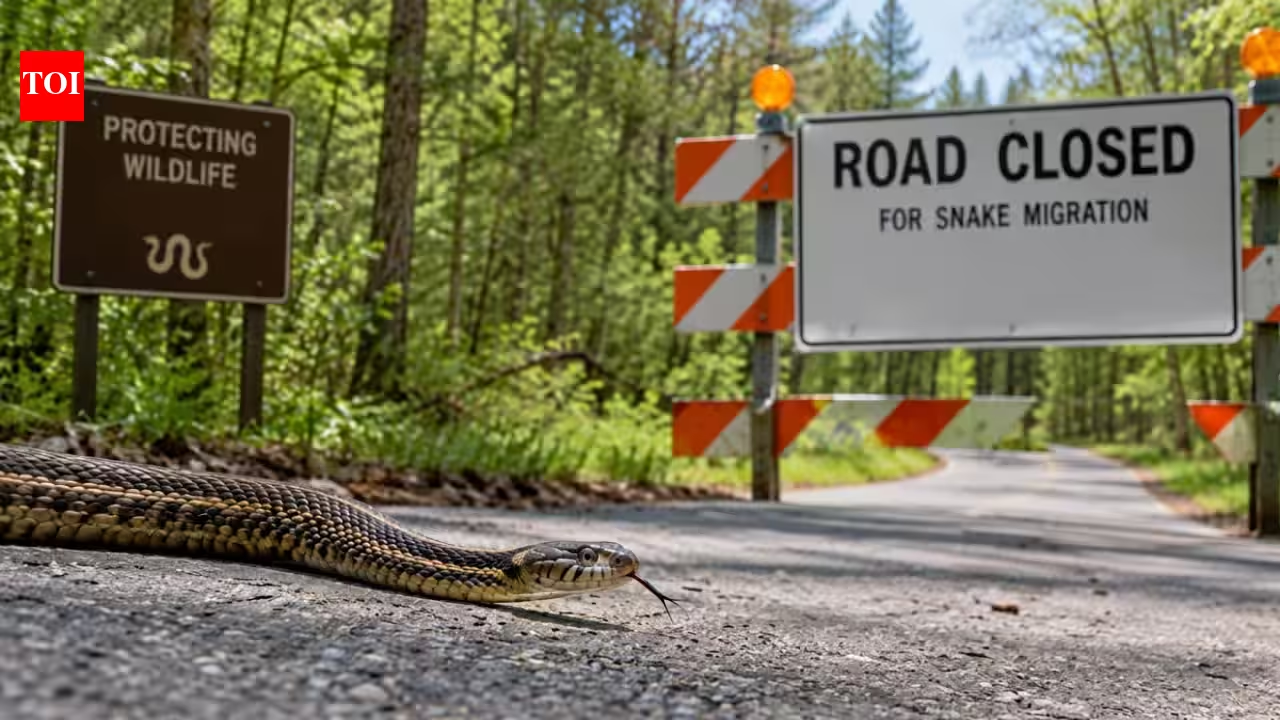

A quiet road in southern Illinois has an unusual distinction: it disappears from the traffic map twice a year, leaving snakes, frogs and turtles to cross without the threat of passing cars. Known as Snake Road, the route runs through the Shawnee National Forest between LaRue Swamp and the LaRue-Pine Hills limestone bluffs. National Geographic’s educational account describes how the road crosses a seasonal migration route used by snakes and other reptiles moving between the two habitats. Seasonal closures began in 1972, where the road is not permanently closed.The spectacle attracts wildlife enthusiasts hoping to spot dozens of snakes in their natural surroundings, while highlighting how a simple road can become a serious obstacle for migrating wildlife.
The snake migration route across Snake Road
The animals are not crossing simply because the road happens to be in their way. Their seasonal movements take them between the swamp and the rocky hills on opposite sides.During warmer months, the swamp provides feeding and living areas. When the seasons change, many reptiles head towards the limestone bluffs, where cracks, caves and rocky spaces offer places to shelter during colder weather. The return journey happens in spring.LaRue Road sits directly across this route. That creates a problem because reptiles are often drawn to the road surface when temperatures are cooler in the morning and evening. The warmed pavement can become an attractive place to rest, leaving slow-moving animals exposed to passing vehicles.The area is also home to species that are unusual this far north, including cottonmouths and southern leopard frogs.
How Snake Road’s seasonal closures protect migrating reptiles
The decision to restrict traffic dates back to 1972. The road was closed during the migration periods to reduce the number of reptiles being killed by vehicles. The closures were initially unpopular with some people living nearby, according to wildlife officials quoted in reports about Snake Road. Over the years, that opposition eased as the purpose of the restriction became better understood.Today, the road is closed during the spring and autumn migrations. The exact dates cover roughly two months in each season, giving animals a vehicle-free route between the two habitats.For wildlife officials, the arrangement is fairly simple. If cars are removed from a road that thousands of reptiles need to cross, the immediate danger of being struck is removed too.
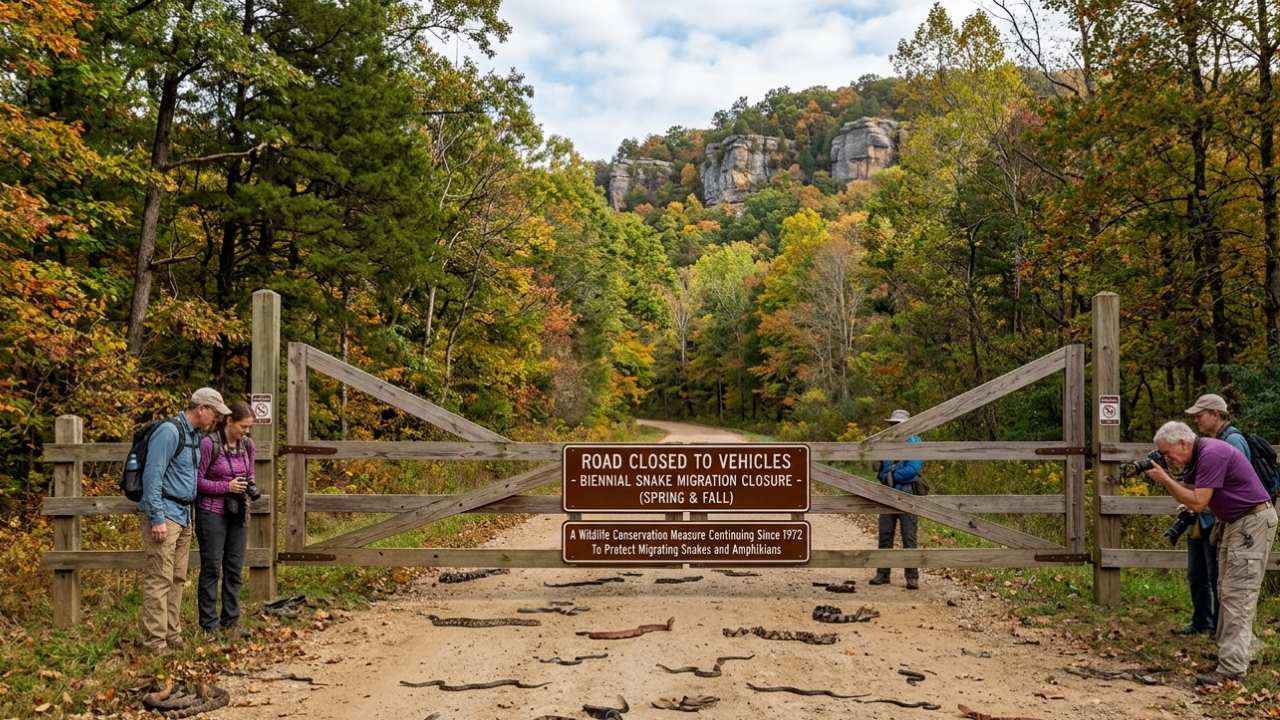
AI Generated
Snakes, turtles and frogs share Snake Road’s migration route
Despite its name, snakes are not the only animals using the route. Frogs, toads and turtles also make the journey between the swamp and the bluffs. As reported by CBS News, there are more than 20 snake species recorded along the road during the autumn period, including three venomous species. Northern copperheads are among them, although they can be difficult to spot in southern Illinois.That does not mean visitors are surrounded by snakes every time they walk the road. Herpetologist Scott Ballard, who has studied the area, has said seeing around 20 snakes during a visit would already be a good day.The road itself is about two and a half miles for a walk there and back. People come not only to look for reptiles but also to walk through the forest and limestone landscape.
How swamps and limestone cliffs create a vital wildlife route
The geography around Snake Road is an important part of the story. On one side is LaRue Swamp, connected to the wider Mississippi River region. On the other are the LaRue-Pine Hills, where limestone cliffs rise to around 46 metres, as reported.The limestone has weathered into ridges, caves and crevices. These spaces give reptiles places where temperatures are more suitable during the colder months, while the surrounding forest and swamp provide different resources at other times of year. The road happens to run through it. Reptiles are particularly vulnerable on roads because they move slowly and often remain still when approached. A warm road surface can make the danger worse by encouraging them to stop directly in the path of traffic.Snake researcher Rich Seigel has estimated that vehicles have killed close to one in four snakes in the area studied. Across the United States, road deaths have also taken a significant toll on snakes and other reptiles.According to The National Geographic, Wildlife officials, Ballard and Deaton said that they see fewer dead reptiles on the road during the closure.
Why snakes matter beyond Snake Road
Snakes are often treated as unwanted visitors, but their place in the local food chain is more practical than that reputation suggests. A single snake can consume a substantial amount of prey over the course of a year. Ballard has estimated that one snake can eat around nine pounds of rodents annually. Without predators such as snakes, rodent numbers could rise.Snakes also form part of the diet of other animals, including herons. Removing them from the ecosystem would not simply mean fewer snakes. It would alter the availability of prey and predators around them. That is one reason the migration is treated as a wildlife management issue rather than simply an unusual spectacle.
What happens when people encounter a snake
Visitors can walk along Snake Road while vehicles are prohibited during seasonal closures, but encounters with wildlife require caution because some snakes in the area are venomous. Herpetologist Scott Ballard has explained that snakes generally bite when they feel surprised or threatened rather than actively seeking out people. Ballard, who has been bitten several times while working with snakes, said he had never been bitten by a venomous species. His interest in reptiles began at age 10, when he received a pet snake because he was allergic to dogs and cats. That childhood fascination eventually led him to study the snakes around Snake Road.Tips for visitors encountering snakes:
- Stop and slowly move a step or two away if you encounter a snake.
- Do not approach, handle or attempt to startle it.
- Observe snakes from a safe distance and allow them to move away undisturbed.
A seasonal road with an unusual purpose
Snake Road remains a functioning route through the Shawnee National Forest, but for several weeks each spring and autumn it serves a different purpose. The traffic signs and barriers give reptiles a rare stretch of road where vehicles are removed from their path.For visitors, the migration offers a chance to see animals moving through a landscape they otherwise might never notice. For the snakes, frogs and turtles, it is simply part of their seasonal movement between the swamp and the limestone hills.The road’s unusual status comes from that overlap. It is not closed because the reptiles have taken over the road. It is closed because, for a short period each year, the road cuts directly across a route they have been using for far longer.