
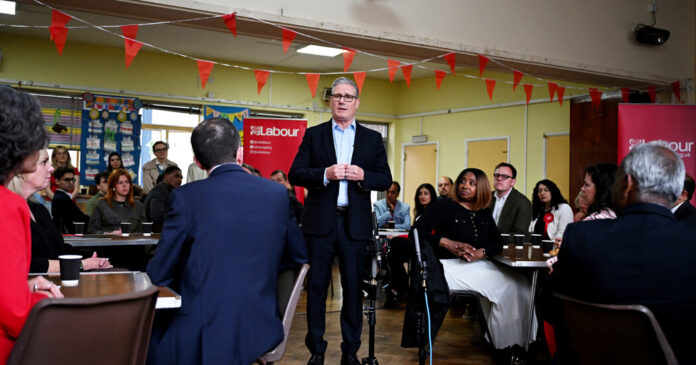

Early results from a set of elections across Britain showed big losses for the Labour Party, led by Prime Minister Keir Starmer, in his biggest — and most perilous — electoral test since his general election victory in 2024.
In Scotland and Wales, people voted on Thursday for seats in their national parliaments, which oversee issues including health and education. In many parts of England, voters elected representatives for local and municipal governments. Northern Ireland, the fourth part of the United Kingdom, did not hold elections.
Counting was underway in Scotland and Wales on Friday. The first English results were rolling in and showed significant gains for Reform U.K., the right-wing populist party led by the Brexit campaigner and ally of President Trump, Nigel Farage.
Here’s what’s at stake.
What did people vote for?
In England, about 5,000 seats on municipal councils across 136 areas were on the ballot — though many of those municipal councils had only a third of their members up for election. In addition, six mayoral contests took place.
Scotland and Wales have their own parliaments and have autonomy over some policies, including health and education. Elections are normally held every five years.
Mr. Starmer himself was not on the ballot, and there were no elections on Thursday for the British Parliament, which is the main legislative body for England, Scotland, Wales and Northern Ireland.
General elections to the British Parliament tend to be held every four or five years. Local elections are often viewed as useful indicators of political sentiment in the meantime, but experts warn against extrapolating from them too far, because voters can behave differently at a general election, when the stakes are higher.
What are the implications for Starmer?
Mr. Starmer’s popularity has sunk during his two years in power, and voters expressed their dissatisfaction at the ballot box, including in former Labour strongholds in the northwest of England.
He is under fire over the appointment of Peter Mandelson, a friend of Jeffrey Epstein, as ambassador to Washington, and speculation about a challenge to his leadership has been building for months. A disastrous set of results could plunge him into peril, but a better-than-expected outcome might give him some breathing space.
On Friday, the prime minister took responsibility for the Labour Party’s early losses but insisted he would not step down.
His center-left Labour faces a double squeeze. On its left, an invigorated Green Party is winning over some progressive voters, mainly in urban areas.
On its right, Reform U.K., led by Mr. Farage, is prospering in working-class regions of northern England, the Midlands and Wales. Reform is on course to be the biggest victor in this election.
What are the practical consequences?
The Scottish and Welsh Parliaments control policies including health, schools and many aspects of transport and have some tax-raising powers. Local councils in England oversee services from care of the elderly to garbage collection.
If the Scottish National Party remains the largest party, its leader, John Swinney, is likely to call for a second referendum on Scottish independence. (The party lost the previous one in 2014.) Although the government in London would probably block that prospect, it could stir the debate about Scotland’s future.