

New Delhi:
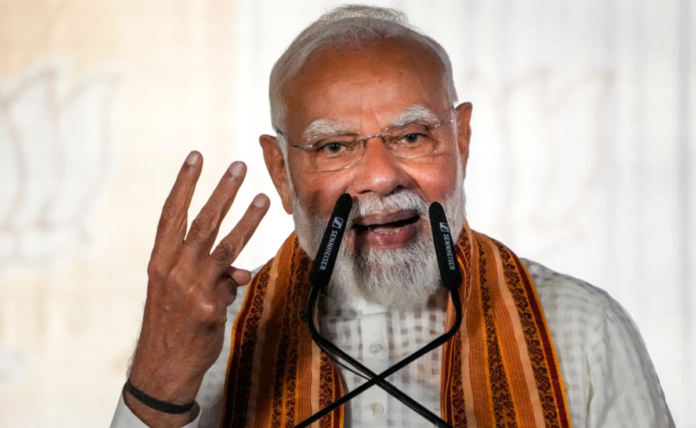
As the hostilities in the Middle East stretched global supply chains and upended the oil market, Prime Minister Narendra Modi on Sunday urged citizens to help the nation conserve petrol, diesel and foreign exchange reserves by using public transport, avoiding unnecessary foreign travel and refraining from non-essential gold purchases.
“Patriotism is not only about the willingness to sacrifice one’s life on the border. In these times, it is about living responsibly and fulfilling our duties to the nation in our daily lives,” PM Modi said in Hyderabad.
The prime minister called for collective participation to help India face global economic disruptions, supply chain challenges, and rising prices triggered by international conflicts.
Reduce Petrol, Diesel Consumption: PM Modi
PM Modi urged the people of India to reduce petrol and diesel consumption by using metros and public transport wherever available, opting for car-pooling and preferring the railways to transport goods.
He also encouraged the use of electric vehicles.
He called for the revival of Covid-era efficiency measures in the national interest, including working from home, online conferences and virtual meetings.
‘Avoid Non-Essential Gold Purchases’
PM Modi appealed to the people of the country to avoid overseas vacations and foreign weddings to save foreign exchange reserves. He requested the people to avoid non-essential gold purchases for one year. He also asked families to reduce edible oil consumption, stressing that it would benefit both the national economic health and personal health.
He encouraged the people to prioritise Made-in-India and locally manufactured products, including daily-use items such as shoes, bags, and accessories.
The prime minister asked the farmers to reduce the usage of chemical fertilisers by 50 per cent and adopt solar-powered irrigation pumps instead of diesel pumps in agriculture.
He also asked the masses to choose domestic tourism.
Also read: Will Fuel Prices Rise By Rs 25 After Elections? Centre Says ‘Fake News’
The Iran War And The Strait Of Hormuz
The Strait of Hormuz, a maritime chokepoint essential for supplying oil from the Middle East, has remained blocked for over two months following an intense war between the US-Israel forces and Iran. The blockade has resulted in an escalation of oil prices. Due to the cascading effect of the oil shock, the prices of several other imports are also steadily rising, depleting the nation’s foreign exchange reserves.
Iran has announced that it would exact a toll tax from ships passing through the Strait. The US has declared it would interdict any vessel that pays the toll to Tehran.
Around 1,500 ships and their crews are trapped in the Gulf due to the Iranian blockade, the UN’s International Maritime Organisation (IMO) said on Thursday.
Also read: 1,500 Ships Trapped In Gulf Due To Iran’s Hormuz Blockade: UN Maritime Body
Many countries, including Britain and France, are preparing to create an international coalition to secure the Strait of Hormuz.
However, Iran warned Britain and France on Sunday that its armed forces would launch “a decisive and immediate response” to any warships being sent to the Strait of Hormuz, indicating that the crisis is far from over.