

Kolkata:
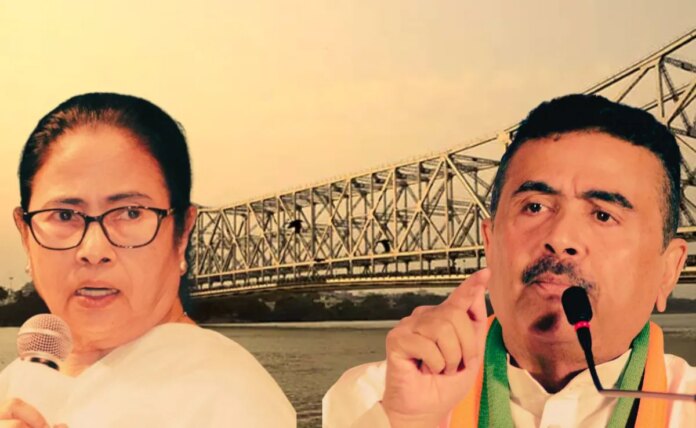
Bhabanipur — the neighbourhood or “para” as it is referred to in Bangla, is steeped in heritage — political, cultural and literary. This assembly constituency in South Kolkata is gearing up for a clash of the titans — Chief Minister Mamata Banerjee versus her protege-turned-rival, Leader of Opposition in the West Bengal assembly Suvendu Adhikari — on April 29, 2026.
Dotted with the houses of stalwarts from the past, the constituency carries a legacy quintessential to Bengal’s identity.
Over the centuries, addresses here have belonged to Netaji Subhash Chandra Bose, Deshbandhu Chittaranjan Das, Educationist Ashutosh Mukherjee and his son Shyama Prasad Mukherjee, former chief minister Siddhartha Sankar Ray, filmmakers Satyajit Ray, Ritwik Ghatak, Mrinal Sen, Bengali cinema’s greatest icon Uttam Kumar, Hindi film actor-director Guru Dutt, singer and music director Hemant Kumar (Hemanta Mukherjee), among many others.
Ground Report: Bhabanipur Weighs ‘Bengal’s Daughter’ Versus Calls For Change
This seat will witness a new age in Bengal’s political legacy this time as Mamata Banerjee tries to defend her bastion against the BJP’s Suvendu Adhikari in a knock-out bout between Trinamool and BJP, even as other players like Congress and CPM are on the ground. Before the emergence of Trinamool Congress, it was essentially a stronghold of the Congress party, even during most of the Left Front years.
The cosmopolitan constituency is also home to the Kali temple at Kalighat, two of Kolkata’s biggest gurdwaras, grand churches of the British era, two Brahmo Samaj Halls and a number of mosques.
Suvendu’s Fight In Mamata’s Para
Crisscrossing this large constituency since campaigning ended for the first phase last week, Banerjee has been holding roadshows, walking the familiar streets and bylanes of her “para,” calling out to people she has known for long, during her public meetings at street corners, almost every day between her campaign schedules.
Banerjee, who has nurtured this seat since 2011, is a local, residing at Harish Chatterjee Street. She went to a local school and graduated from the nearby Ashutosh College, a witness to her fiery student politics.
Amol, who serves food with a smile at “Cafe”, an 80-year-old eatery across Ashutosh College, recalls having seen her leading students protests back in her college days. “She may be the chief minister, but for us, she is someone from our locality,” he chirps, when asked about the upcoming contest.
Read: Factors That Make Bhabanipur A Key Battleground
Coming all the way from Nandigram in Purba Medinipur, Adhikari, has to deal with the “outsider” tag in this old south Kolkata neighbourhood. But the stakes remain high. If he manages to defeat Banerjee here, he will emerge as the unstoppable leader that the BJP had been looking for in the state.
Having defeated Banerjee in 2021 in his home turf Nandigram by a thin margin, after defecting from Trinamool to the BJP, the Leader of Opposition has put his best foot forward. His campaign rallies are big ticket public meetings, roadshows with saffron flags and supporters taking to the streets and then disappearing, as many of them do not live in the vicinity.
Can Mamata Lose Here?
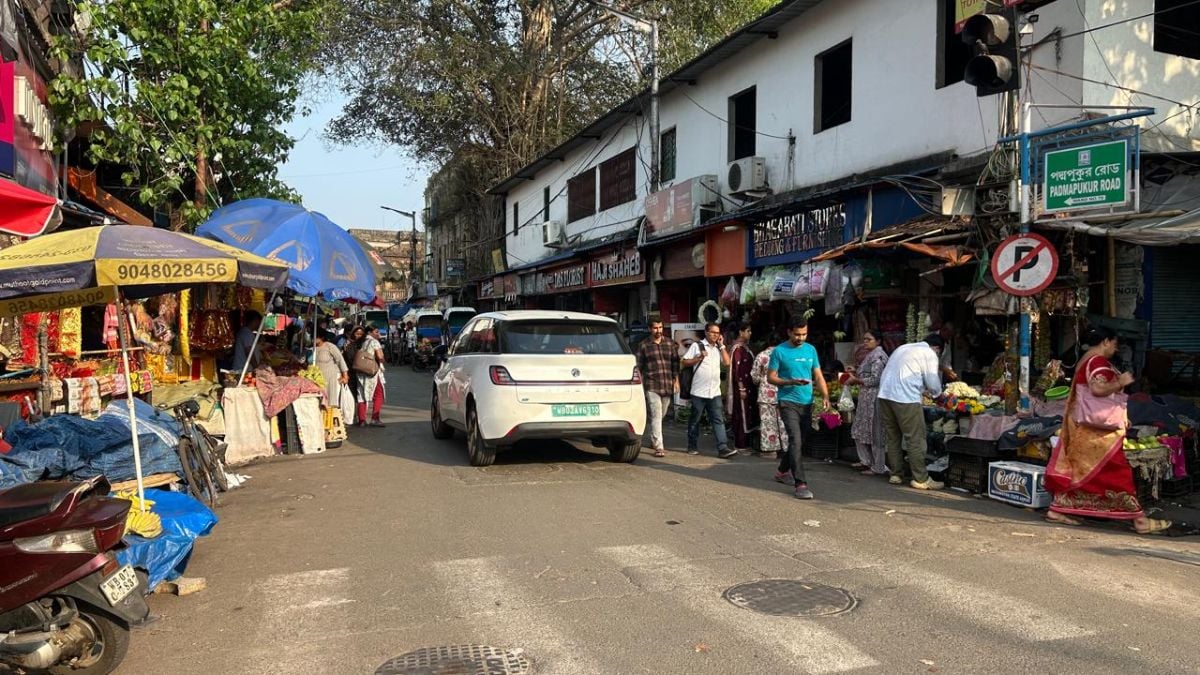
This election, the atmosphere is absolutely different, say residents.
“She (Mamata) can never lose from here (Bhabanipur),” claims Aditi Sircar, 59, a local. “But, for the first time, I heard loud discussions against Mamata Banerjee and Trinamool Congress…in pockets with non-Bengali population,” she adds.
For Bharat Mehta, 65, whose father migrated from Kutch in 1953 and set up his business and family in Kolkata, the narrative is different. A resident Gujarati who grew up here and speaks fluent Bangla, Mehta says, “the buzz in the neighbourhood is “ki hobey (what will happen),” reflecting a palpable tension in this seat, where the verdict has been predictable mostly.
“But I say, in Bhabanipur, it is a prestige issue for Mamata (Banerjee)…she cannot lose this seat. Also, Suvendu made a mistake…he must focus on Nandigram, his home turf. In this seat he is an outsider, does not live here…but Mamata Banerjee may pay the price for other elements in her party elsewhere in the state,” Mehta elaborates.
Read: Mamata Banerjee’s 2026 Endgame: A 226 Target, And Kolkata Dare For Ex-Aide
“For me, the main issues today are infiltration from across the border…Muslims taking over businesses in traditional market places in Kolkata…the RG Kar case and economic slowdown of the state. This was not the city I grew up in. Kolkata was a prosperous city, where my father worked hard to nurture a family, with his shop at Bagri Market. Today many Gujaratis have moved out to Bangalore, Ahmedabad, Mumbai, etc, and many others are preparing to leave,” says Mehta, who runs his own business, after selling his father’s shop in the 1990s.
Investment banker Karabi Ghosh, 30, a voter in Bhabanipur, says, “I feel Bengal is safer for women.”
Sircar, who has a young daughter, echoes a similar sentiment.
The Bengali-Non-Bengali Divide
Clearly, the Bengali-non-Bengali divide that has now come up in the constituency.
Sikh taxi driver and owner of a fleet of cars for hire, Sukhwinder Singh, 39, who lives in Bhabanipur and runs a garage, says, “I don’t know much about politics, but Mamata didi has been very helpful to our community… she even visits our Gurdwara.”
Ratan Kumar, another taxi driver, whose family hails from Ara in Bihar and who lives in Bhabanipur with his wife and three school-going children, bats for a change.
“We voted for the Trinamool earlier, but this time people want “poriborton” (change),” he says.
With less than a week to go for the polling date, the neighbourhood is almost sleepless. The street corner public meetings by the Trinamool and BJP are keeping the evenings alive with political speeches that flow into late night hours to avoid the sultry summer heat. But residents don’t seem to be complaining.
“Election time is always like this. The lights, the sound, the buzz will be over in a week, and we will get back home early,” says Srijan Saha, a young banker, out in the neighbourhood for an “adda” with his group of friends.