

Kolkata:
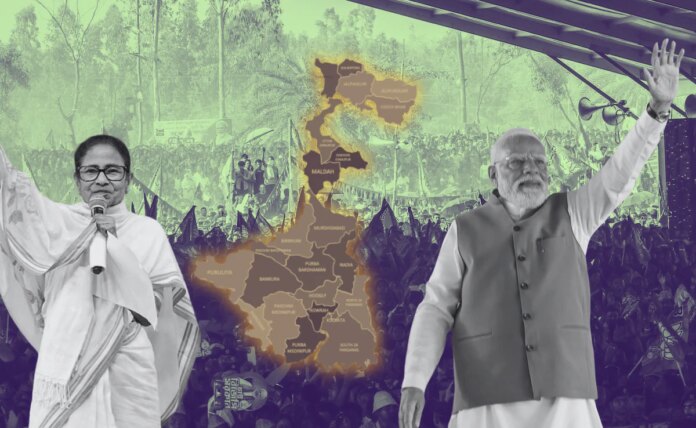
As Bengal elections continue to keep us on tenterhooks, NDTV has traversed the murky political landscape of the state for several months to get a sense of the ground. Is it a Modi wave, or does Mamata still hold strong?
Will the issue of infiltration lead to tectonic shifts, or will the Bohiragata vs Bengali narrative drown out other issues? Will the first phase, which covered North Bengal and is projected to be a saffron stronghold, propel the BJP to a historic victory, or will Mamata hold the bull by the horns by sweeping South Bengal, which goes to polls tomorrow?
The debates are never-ending, making it one of the most nail-biting elections of the season. NDTV’s power-packed team explored the politics of jhalmuri, fish, infiltration, and women’s security. From exclusive interviews with stakeholders and conversations with communities across the state’s diverse demography, we offer you the key takeaways from our reporters and seasoned editors to help you decode the nitty-gritty.
Manogya Loiwal
The five ‘M’ factors that will set the tone for the West Bengal Election 2026 as the state heads into a high-stakes electoral battle.
Mahila (Women Voters): Women, nearly 50 per cent of the electorate, remain a decisive force. The support base of Mamata Banerjee among rural women continues to be strong, largely due to welfare schemes. However, the BJP’s proposed Rs 3,000 “Annapurna Bhandar” scheme could disrupt this equation.
Minority: Minority voters have historically been a pillar of strength for the Trinamool Congress. Their consolidation behind Mamata Banerjee is expected to remain largely intact, making it a critical advantage for the ruling party.
Majority: On the other side, a visible consolidation of Hindu voters is emerging. Sources say that more than two crore saffron flags are in circulation in the state.
Interestingly the widespread display of saffron flags across districts signals a shift that could significantly benefit the BJP.
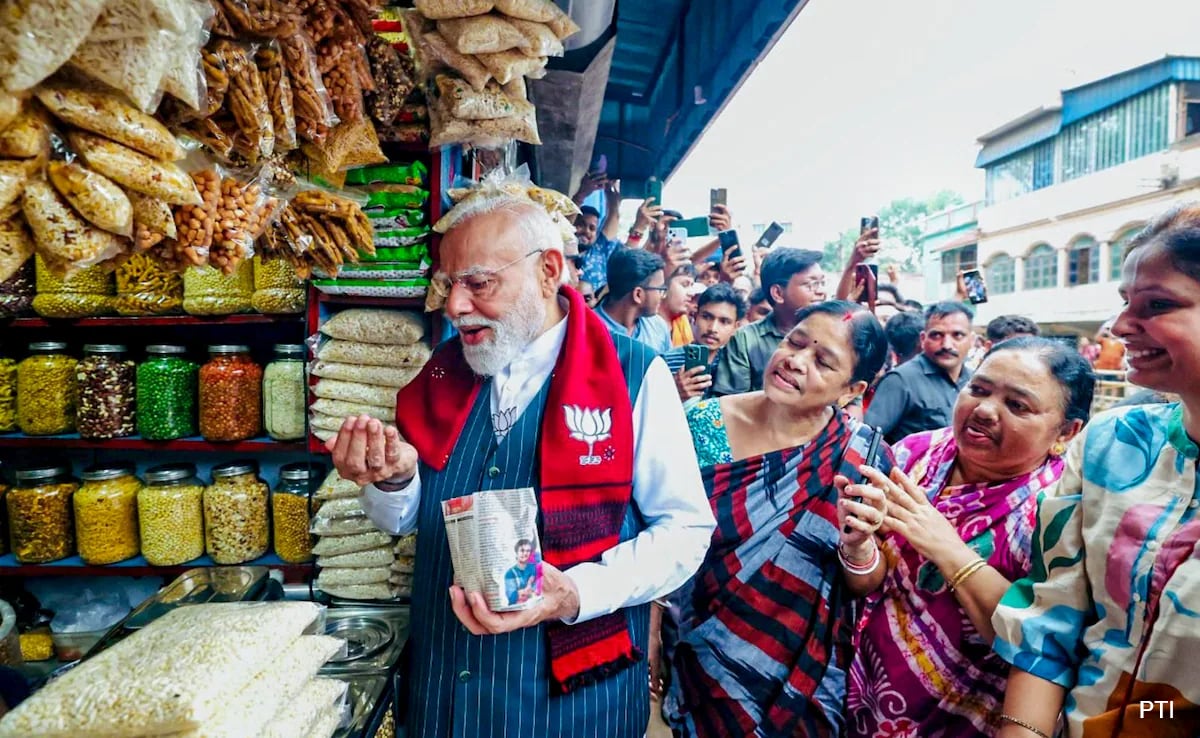
Modi: Prime Minister Narendra Modi remains the BJP’s biggest campaign force. His grassroots outreach – from cultural symbolism like eating “jhalmuri” to Thanthania Kalibari temple visits and boat ride in the river – continues to resonate more than ever with voters.
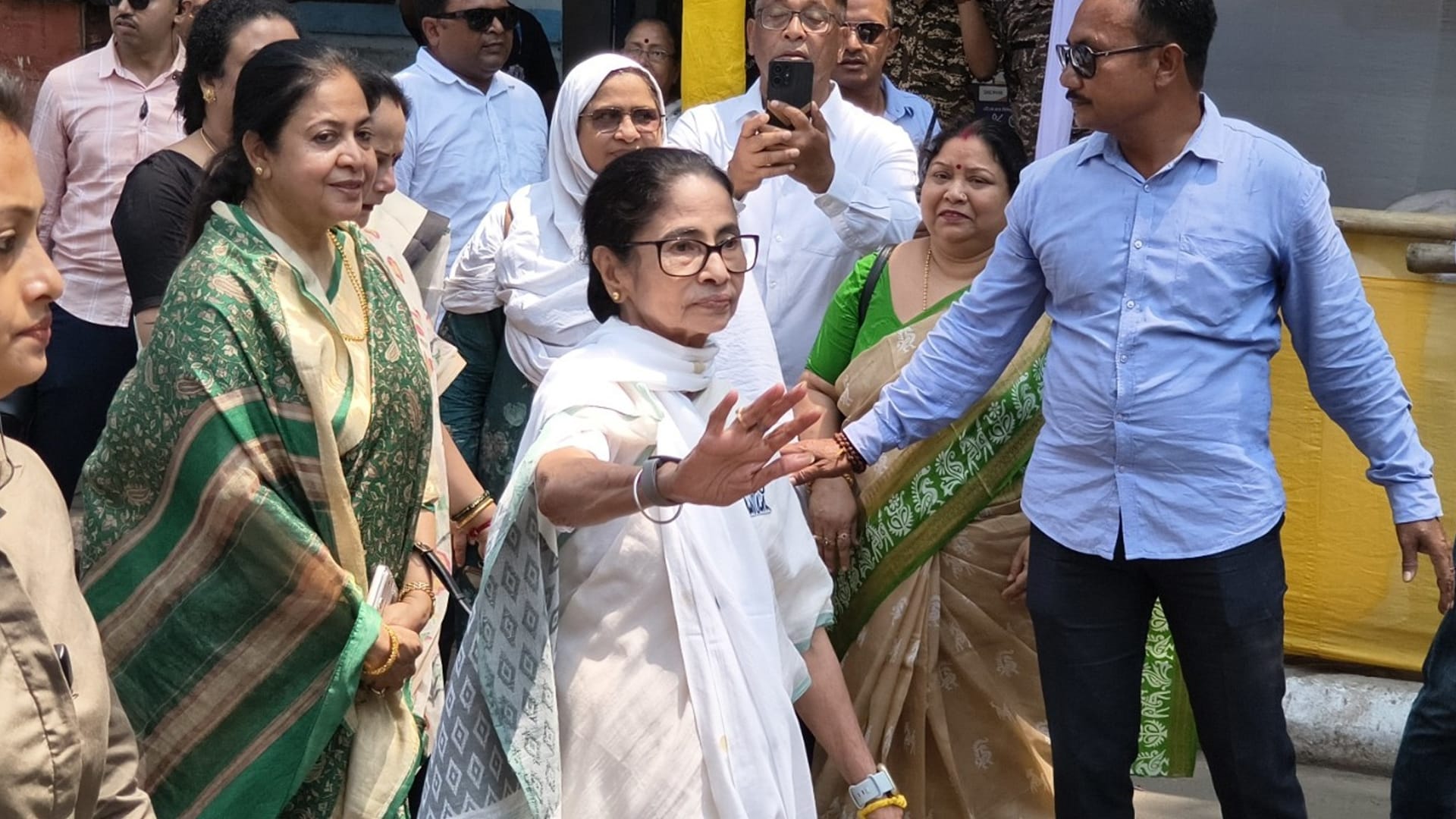
Mamata Banerjee: Ultimately, Mamata Banerjee herself remains Trinamool’s strongest asset. A mercurial leader of her stature with political agility and connection with the masses ensures that she remains central to the contest.
Jayanta Ghosal
The BJP is super-duper aggressive, especially in comparison to 2021, and this time, for the party, it is a do-or-die situation. SIR has emerged as a major issue in the election, with both sides making it a core plank – while the BJP is saying no bogus or dead voters and no infiltrators in the voter list, the TMC is calling it a conspiracy by the BJP, alleging the EC is BJP’s B team and that Muslim and TMC vote banks have been deleted. In 2021, the BJP’s main dominant campaign issue was hyper Hindutva, but in 2026, the main issue is “poribartan”, or change, of Bengal.
For the first time in Bengal polls, food habits have become an issue. Vegetarianism versus non-vegetarianism, with fish especially became a talking point. The outsiders versus insiders debate – Bengali and non-Bengali – has also been prominent, with the TMC trying to focus on “Bong” identity while the BJP has attempted to assert that it is not anti-Bong. The presence of the Prime Minister and the Home Minister in Bengal with this frequency is unbelievable and perhaps the first time in Bengal’s history. Leaders from Indira Gandhi and Rajiv Gandhi to PV Narasimha Rao never did this.
“Joy Shri Ram” remains the BJP’s basic core classical slogan, but this time, to connect with Bengal, chants like “Joy Ma Kali” and “Joy Maa Durga” have also been used. The Muslim vote remains significant. Last time in South Bengal, the ISF was present, while this time, Humayun Kabir has floated a new party against the TMC. What will be the achievement of Humayun is not important, but the formation of a new Muslim party near Bangladesh border districts is interesting.
The Congress may increase its numbers while it currently has zero seats in the assembly.
On Bangladesh, Jamaat, and BNP, the BJP has not used those narratives, so there is no antipathy against the present Bangladesh regime, and even in Dhaka, the government has maintained a positive silence. Personal attacks against the chief minister from the BJP side have been less. Didi has attacked the Home Minister more than the Prime Minister. Abhishek Banerjee has been more in backroom strategy, while Didi has remained at the forefront. In the BJP, PM Modi is the main star campaigner, followed by Amit Shah.
Manoranjan Bharti
It can certainly be said about the West Bengal elections that there is a tough contest between the Trinamool Congress and the BJP. If the BJP wants to win Bengal, it will have to make a significant dent in Mamata Banerjee’s women voter base. Mamata Banerjee’s Lakshmi Bhandar scheme is benefiting around 12.5 million women, and its impact is visible across villages.
The second factor is the minority vote. If, this time, Congress, Humayun Kabir, Asaduddin Owaisi, and the Left parties fail to split the Muslim vote in Muslim-dominated areas, it will be difficult to defeat the Trinamool Congress. In the areas I visited, such as Murshidabad and Berhampore, there was a visible impact of Rahul Gandhi’s rally, and Owaisi’s rally also drew large crowds. However, whether this has actually caused a split in the minority vote bank will only be known from the results. Experts believe that this vote bank is still largely with the Trinamool Congress.
The third issue is SIR. Those whose votes have been deleted from the voter list will not be able to vote, but the remaining members of their families whose names are still on the electoral roll – who will they vote for?
Therefore, the West Bengal election has become interesting and intriguing, and it is difficult to predict the outcome.
Ajit Jha
Bengal elections suggest that people in central Bengal are talking about “change and porivorton.” There is a wave for the BJP, stronger in the north but also visible among non-Bengalis in Central and South Bengal, while Mamata has a huge edge in South Bengal. Women voters largely support Mamata, pointing to welfare measures like Lakshmi Bhandar, although urban educated women are concerned about safety and security.
Youngsters everywhere want to escape West Bengal, complaining of “no jobs, no opportunities.” Industrial areas are in total decline, with ancillary units around Durgapur, Asansol, Burnpur, Kulti and Barakar having shut shops. Bengal used to boast of the best colleges and universities in the past, but not anymore, with education seen as an abject failure.
One defender of the TMC said that although there is decay and decline, only in Bengal can you get a plate of rice with fish and vegetables for Rs 40, which holds true across the state. Bengali voters largely consider the BJP as alien, a “Bahiragot” or saffron party led by Hindustanis and not Bengalis.

The issue of ghuspaithi resonates mainly in border districts, not in cities and metros. Mamata remains popular among the poor (chottolok) as well as the culturally sensitive bhadramahila and bhadralok, while the BJP finds support among non-Bengalis, tribals, Matuas and Rajbongshis.
Sreyashi Dey
The first phase of polling in West Bengal has revealed several key trends shaping this election. The SIR exercise has impacted the electoral landscape across the state, though its precise impact on individual parties remains uncertain.
The ECI has managed to conduct a largely violence-free poll so far, marking a significant departure from past elections in the region. This has been aided by unprecedented measures, including officers transfers, stricter enforcement of rules, and compressing the election into just two phases. Meanwhile, the BJP’s campaign has stood out for its sharp messaging and tailored approach to Bengal’s political context, reflecting a high level of preparation.
Another striking feature has been the large-scale return of migrant voters, a phenomenon not witnessed in recent elections, potentially adding a new and unpredictable dimension to the overall outcome.
Mohua Chatterjee
From what I could gather; Bengal has anti-incumbency in pockets, especially in urban centres. But, it’s not overwhelming to throw out the present regime, also because BJP has yet to connect in depth with Bengali voters. The BJP is acceptable mostly to non-Bengali /Hindi speaking citizens.
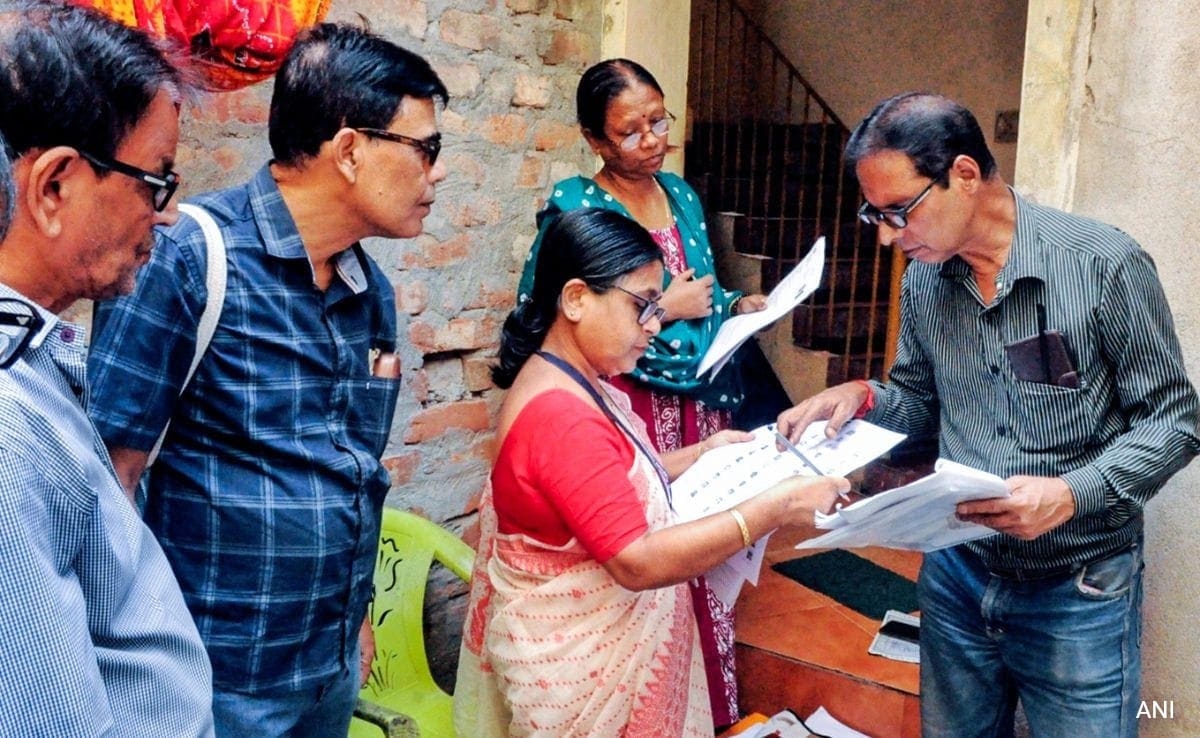
SIR is the key issue and theme of this election in Bengal. It has created fear of losing voting rights which are seen as an extension of losing citizenship in some areas. So everybody is going to turn up to vote. That also adds to the surge in voting percentage. TMC is seen as the forerunner in this election. Mamata is still popular and main rival BJP is without a CM face.
Prabhakar Kumar
In Alipurduar, especially in tea garden areas like Kalchini and Madarihat, and in Jalpaiguri’s Dhupguri belt, welfare schemes are a big factor. Many women and rural voters spoke about direct benefits and seemed satisfied with what they are getting. There is a sense of comfort with the current system.
In Cooch Behar, mainly in Sitai and Dinhata, the atmosphere felt the most tense. There was heavy security, but people spoke carefully. Old political rivalry and past clashes are still fresh in people’s minds, and that could influence voting.
In Darjeeling and Kurseong, the mood was different. Here, people talked more about jobs, tourism, and identity. The Gorkhaland issue is not very loud this time, but it still exists in the background.
In Siliguri, especially in Matigara and Naxalbari, urban voters focused on development issues like roads, traffic, and employment. One thing was common, voters are not openly saying whom they will vote for. Most people avoided giving clear answers, which suggests a close and competitive election.
Tanushka Dutta
As a young reporter tracking the trail across West Bengal, this election doesn’t feel like a wave, it feels like a negotiation. In village courtyards and crowded bazaars, voters are weighing what they’ve received against what they’ve been promised. The Trinamool Congress is leaning heavily on its welfare record, while the BJP is pitching change through identity and governance narratives.

Local issues such as jobs, welfare delivery, women’s safety, and rural infrastructure, are shaping conversations far more than national narratives. Women voters, in particular, are emerging as a decisive force, speaking with clarity about what they expect beyond campaign promises. The Opposition is attempting to consolidate anti-incumbency, but organisational strength on the ground continues to matter.
This election, ultimately, feels more like a layered contest, where booth-level dynamics, not just big rallies, could determine the final outcome.
Saurabh Gupta
The Trinamool faces anti-incumbency after 15 years in power and the anti-incumbency is more pronounced in the region. The TMC campaign focussed on decisions taken on tea garden issues, land allotment but largely the anti-incumbency remains.
The BJP is pushing national security and infiltration from Bangladesh as major poll issues in the region as it includes the border with Bangladesh and the PM has also pushed this narrative, especially around the Chicken’s Neck region.
The BJP expects to perform really well in this region as it has been their stronghold, and the BJP will be expecting to do better with a focused campaign by both PM Modi and Amit Shah.
Malda-South Dinajpur will be the game-changer beyond the Ganges as the Congress could also win some seats in Malda. The Trinamool expects some losses here too. But overall in North Bengal the Trinamool has tried to regain ground in the area and it has been able to do so in some pockets of the region.
The distance between North Bengal and Kolkata has been a perennial complaint and many feel that with the Union Government’s focus on infrastructure in the region, voters believe their chances of getting more attention towards their issues if they vote BJP.
Rittick Mondal
The Bengal election this time is violence-free compared to past elections. People on the ground are silent, not expressing their thoughts, while voters of Bengal have been much more expressive regarding elections in the past.
The impact of SIR could be a decisive factor. As we don’t know who will actually benefit due to SIR. This has pressed the panic button. Which is why all voters of Bengal are feeling that if they failed to cast their vote, it may cost their citizenship. Which is why we are seeing homebound migrants in high numbers this time. Strategy wise, the BJP is more aggressive and more well-planned.
This year’s election is happening on the basis of narrative vs narrative. Fish vs Jhalmuri.