
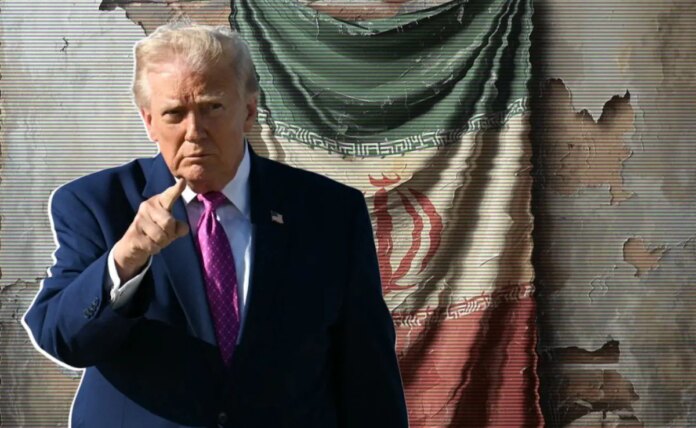

US President Donald Trump is once again trying to control Iran’s nuclear programme, but the situation is now more complicated. He is facing the consequences of his 2018 decision to withdraw from the Joint Comprehensive Plan of Action.
Earlier, the deal kept Iran’s nuclear work under limits. However, in 2018, Trump pulled the US out of this deal because he felt it was not strong enough, reported the New York Times. Soon after its exit, Iran began stepping away from those limits and increasing its nuclear activities.
In 2015, under Barack Obama, the US signed a nuclear deal that placed limits on Iran’s nuclear activities for 15 years until 2030. In 2015, Iran agreed to give away almost all its nuclear material. It sent about 12.5 tonnes of uranium, about 97 per cent, to Russia.
However, three years after the deal, Trump withdrew the US from the agreement, calling it “one-sided,” despite objections from several of his national security advisers.
Following the exit, Iran began increasing its uranium enrichment much sooner than expected and expanded its stockpile. This brought Iran closer to making a nuclear bomb much earlier.
Now, Trump’s negotiators, including his son-in-law Jared Kushner and special envoy Steve Witkoff, are dealing with the fallout of that move. Talks have also hit roadblocks, with Trump recently calling off a round of nuclear negotiations.
The concern is not just one stockpile, as investigators say Iran has about half a tonne of uranium that is enriched to a level very close to what is needed for nuclear weapons. Some of this material is believed to be stored in heavily guarded underground tunnels.
Reports state that Iran is said to have around 11 tonnes of uranium in total, at different levels of processing. If it is further refined, experts say it could be enough to make up to 100 nuclear bombs.
Earlier, nuclear talks mainly focused on one issue, which was Iran’s nuclear programme and its uranium. But now the issues have expanded to long-range missiles, regional tensions in the Middle East, and the Strait of Hormuz, a key global oil route blocked by Iran.
Trump is now trying to achieve a deal with Iran that he believes will be better than the 2015 agreement.
At the centre of the talks are two main US demands: First, Iran must stop further uranium enrichment, and second, Iran must also hand over its existing nuclear fuel stockpile built over the past several years. Both these demands have been refused by Iran.
Trump has already publicly claimed that his own yet-to-be-finalised deal will be “far better” than the nuclear agreement signed in 2015 under Obama.