
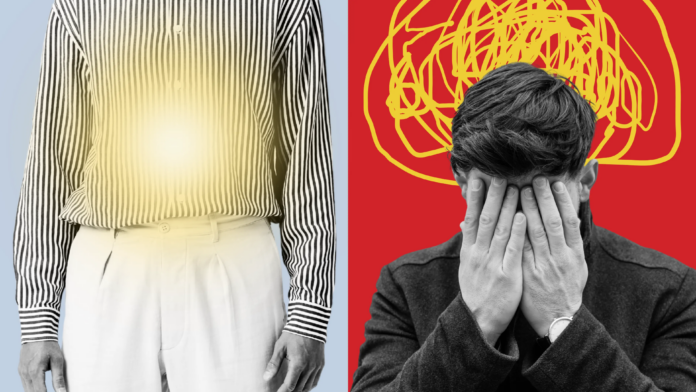

Anxious or intrusive thoughts often demand action, but real wisdom “should guide us in a way that feels healthy, not just rapid,” says Kissen. In other words, sit with the feeling without acting right away, even if that feels uncomfortable. “Slow it down to notice [the thought], and then we can decide [what to do],” she says.
Controlled, deep diaphragmatic breathing exercises have been found to help calm the fight-or-flight response, including spiking cortisol levels, that can make you feel tense when you’re experiencing anxiety. Beck also recommends a technique called progressive muscle relaxation, “where you are alternately tensing a set of muscles and then releasing them” to reduce physiological symptoms of anxiety.
Be realistic about the worst-case scenario
Anxiety often involves lots of catastrophic thinking, “so a really good question to ask yourself is, ‘OK, what’s the worst that could happen, and if it happened, how would I cope?’” says Beck. Accurately assessing risk can help put anxiety into perspective, experts say. Think through the probability of that worst-case result happening, and if it were to, “say, ‘Would that be the end of the world?’” asks Barlow.