

Tehran:
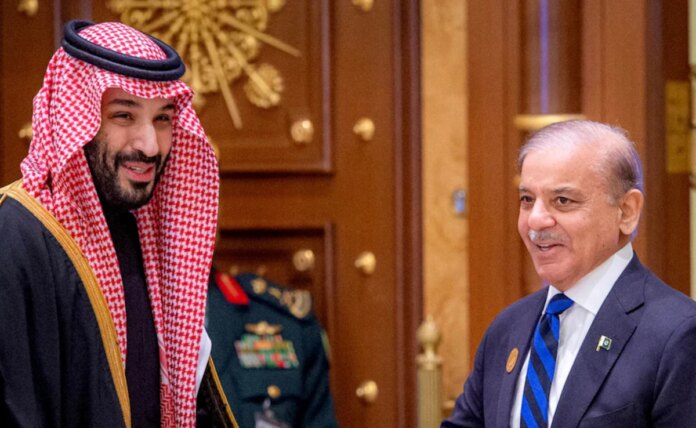
Amid the rubble of the US-Israel war on Iran, a new quadrilateral defence alliance appears to be taking shape in the Middle East, with regional powers closing ranks for a seat at the table. Pakistan has indicated that Qatar and Turkey are planning to join the nuclear-armed nation’s mutual defence cooperation pact with Saudi Arabia as the ongoing conflict reshapes security alignment in the Middle East and South Asia.
‘The arrangement is currently in the process of being finalised,’ said Pakistan’s defence minister, Khawaja Asif, on a local television show on Monday night.
“If Qatar and Turkey also join this existing agreement, it will be a welcome development,” he said.
🇵🇰🤝🇸🇦 New partners may sign onto current Pakistani-Saudi defense pact
Pakistan’s Defense Minister, Khawaja Muhammad Asif, has stated that Qatar and Turkiye may soon join the existing defense pact between Pakistan and Saudi Arabia.
🗣️“This arrangement has been partially… pic.twitter.com/kmwN7ngHjO
— Sputnik (@SputnikInt) May 12, 2026
The Significance Of The Alliance
The expanded alliance, powered by Saudi and Qatar’s oil money, Turkey’s high-tech defence technology and Pakistan’s nuclear capabilities, could transform the security landscape of the region. It would bring together erstwhile rivals Riyadh and Ankara, as America’s war against Iran has pulled the wider Middle East into the conflict, marking a reset in ties after years of rivalry over Sunni leadership in the Middle East.
The Strategic Mutual Defence Agreement, signed by Islamabad and Riyadh in 2025, reportedly contains a collective defence clause under which any aggression against one signatory would be treated as an attack on all. According to a Bloomberg report, the clause echoes NATO’s Article 5.
People familiar with the matter said an expanded alliance is a logical step, as the Iran war has proved that increased reliance on the US would not protect regional interests during conflict.
“As the US prioritises its own interests and that of Israel in the region, changing dynamics and fallout from regional conflicts are prompting countries to develop new mechanisms to identify friends and foes,” Nihat Ali Ozcan, a strategist at the Ankara-based think tank TEPAV, told Bloomberg.
The potential expansion carries added weight because Ankara is not just another regional actor. It is a long-standing member of the US-led NATO, with the second-largest military within the alliance. It also has a mature defence industry and has assisted Pakistan during Operation Sindoor in May 2025– a development that might have wider security implications for India.
The two new inclusions to the Saudi-Pakistan pact would potentially create a new axis that blends Ankara’s military experience and defence manufacturing base, Islamabad’s nuclear deterrent and ballistic missile capability, and Saudi Arabia and Qatar’s financial muscle. Some experts have called it the “Muslim Nato” or the “Islamic Nato“.
What It Means For India
In an op-ed in The Eurasian Times, Indian Air Force Air Marshal Anil Chopra (Retired) noted that if finalised, the “Islamic NATO” alliance could seriously challenge and even threaten countries like India, Israel, Armenia, and Cyprus, among others.”
He said the framework would complicate India’s security landscape, even if it does not translate into an immediate military threat.
In the article, the military veteran said, “Turkey and Pakistan have been working very closely. India, too, is concerned about this nexus. India has also been working more closely with Greece and Cyprus. India and Israel could coordinate more closely in the Mediterranean.”