

A unique military operation in global military history marks its first anniversary. ‘Operation Sindoor’ followed fundamental military doctrines astutely, in keeping objectives steady, clear and based on the reality of a nuclear environment. While these principles still apply, warfare and international relations have changed beyond recognition in the last one year. Another Op Sindoor, though highly likely, would have to be framed and executed in quite a different milieu, not to mention that both sides have built upon their experiences to hone their own capabilities and doctrines. The key for the next round may be flexibility, and learning some very hard lessons on what the world is like nowadays.
The Uniqueness of Sindoor
Sindoor will remain unique in the annals of warfare for three reasons.
First, it was just 88-hours long and ended at a time of our choosing. Consider Ukraine, Iran and other wars.
Second, it hit a pause at each stage, allowing Pakistan to step back if it chose to, thus knitting diplomacy firmly into operations.
Advertisement – Scroll to continue
Third, the political leadership held tightly on to the reins , allowing the operation to expand judiciously and calling a stop when it was judged that enough punishment had been delivered. Clarity of purpose was, therefore, across the board, which was to show Pakistan that India would no longer be blackmailed by nuclear threats into ‘restraint’, even while exercising operational restraint throughout the operation, so as to remain under the nuclear threshold.
That last point was vital. The lessons of the Balakot strike, for instance, which led to the capture of Wg Cdr Abhinandan, were learned well. There was to be no crossing of the border. Complete air superiority meant that neither did Pakistan break this rule. It stopped in time, too. That’s interesting and needs further study. Understanding the enemy is the foremost requirement in war planning.
The Wide Reach Of Pak Terrorism
In terms of the future, one constant is that Pakistan’s terrorist sponsorship continues, as apparent in at least five major modules interdicted in India in April alone. One point to be noted is that one major one had Bangladesh roots, while another was smuggling weapons from India. All our borders are again of concern, with Nepal now openly anti-India, and Bangladesh’s new Prime Minister, Tarique Rehman, facing strong internal headwinds from multiple sources. Then there are the multiple groups seemingly in action independently. Recent arrests of another duo of doctors planning a ricin attack, apparently on the basis of’Islamic State’ handlers, is an indication, as are reports of “TTP” penetration into Bangladesh.
The next major terror attack could thus come from almost anywhere, with a double whammy of not just carnage, but an effort to damage bilateral relations. That means a far more intensive intelligence collaboration or aggressive penetration with neighbours. This is a deliberately engineered cocktail, intended to make it difficult for India to provide ‘proof’ of a terrorist attack, a narrative that was successful post-Pahalgam, even within India. More diffusion is, therefore, a certainty.
The Arms Come Flowing In
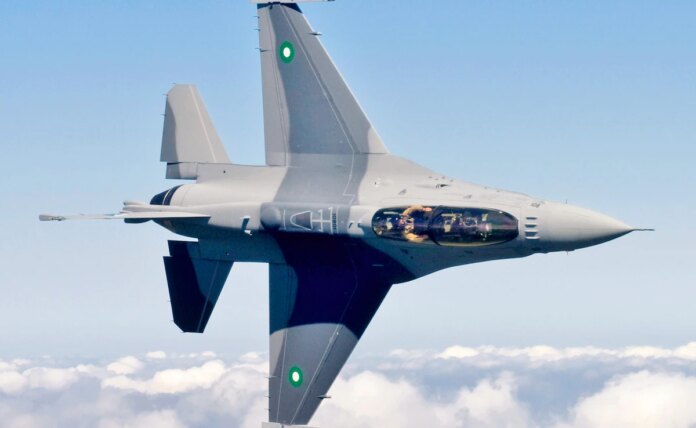
A somewhat new aspect is that the Pakistan army is now fully in power. No doubts about that as the Field Marshal holds talks and flies internationally in his expensive, private jet. Decision-making will now be far more discreet, with only a loud-voiced and unreliable Defence Minister’s constant threats serving as a measure. Data shows that arms imports by Pakistan grew by 66%, with China supplying 80% of weapons, up from 73% in 2016-20. Add to that the induction of new stealth fighter J-35 jets, which are to be fast-tracked to mid-year in terms of delivery. This will be a concern for the Indian Air Force.
Then there is the marked increase in space assets, with three launches so far, and a hyperspectral satellite last year, all from China. This is a constellation that would deliver on Munir’s threat to attack even the furthest point in India, both in the South and the Northeast. This is China making sure that not only is India forced to increase its defence budget, but that Delhi is kept in place in the subcontinent. Remember that prior to the Pahalgam attack as well, Chinese satellite imagery was possibly given to Pakistan, while during the conflict, a continuous stream of imagery helped. This pattern still holds.
Then there is the fact that two months after the end of Operation Sindoor, the Pakistanis announced the formation of the Strategic Rocket Force, which will have conventional rockets from the Nuclear Command. Point to note for the future: in today’s wars, missile use is the norm rather than the exception – count some 650 missiles by Iran and probably double that by the US, and an estimated 9,600 missiles of various types by Russia – not including attack drones – along with Ukraine’s veritable storm of drones and some 500-plus Western-supplied missiles.
As both wars progress, it’s the drones that are causing the most damage. Future emphasis is not just on ballistic missile defence but most vitally on short-range, slow-flying drones. But the point is that the ‘no-rules’ order is in force. Forget a ‘condemnation’ of any country that fires missiles. That’s history.
And, Trump
The most critical is the stance of not just the United States, but also much of Europe, now praising the Pakistani army in particular for its ‘mediation’ efforts. While US Vice-President JD Vance very sensibly said that the US would be engaged diplomatically but not intervene between two nuclear powers, President Trump took complete credit for ending the war. True, there were certainly phones buzzing, once Pakistan – as usual – announced that it was convening its Nuclear Command Authority; in the event, the meeting was never held, and Pakistan reached out for a ceasefire. What the extent of US pressure was is unclear, much like whether the Pakistani armed forces themselves stepped back after they found their sky virtually unprotected.
The point is that a US role this time might be very different. That could include, for instance, a quiet go-ahead until Indian cities are hit, and then President Trump stepping in very publicly, with a mediation effort, headed by himself and his own cronies, through the so-called ‘Board of Peace’. That would be a ‘victory’ of considerable consequence for Pakistan, and also earn Trump accolades. The possibility of such an action, however, is tempered by the fact that actual US assistance to Pakistan has been negligible. It’s all smoke and mirrors. The rest of the world would hurry to “mediate” as well. India should expect a complete ignoring of the original terrorist acts that started this cycle.
A Tweaked Response
The option for India, therefore, is complicated. It may have to avoid a steady escalation ladder and instead opt for strong covert operations to negate the terrorist threat. That requires taking neighbours on board as much as possible, which means shedding a degree of intelligence inhibitions. The Colombo dialogue is a great step in this direction.
Meanwhile, the challenge is to underline the serious terrorist threat from Pakistan to an audience that is now inured to massive casualties in war. Terrorism now seems nothing more than a small-scale affair. In this, much of Europe, as well as Australia, are likely to be partners, since they have every reason to fear a rising wave of anger due to Gaza. That this is all interlinked with Pakistan being the nucleus of the equation has to be hammered home with proof. Note the Hamas visit to Pakistan shortly before the Pahalgam strike.
This is not to argue that a conventional strike must be ruled out altogether. That could happen, in fact this time with the Navy also engaged. There is also a second peculiar issue: to wipe out the impression that Pakistan can be ‘finished off’ in the public mind. It cannot. That is a political challenge, though an astute Prime Minister has already said that India has no fight against ordinary Pakistanis. That is a natural brake for all. Time to hammer that message home.
Disclaimer: These are the personal opinions of the author