
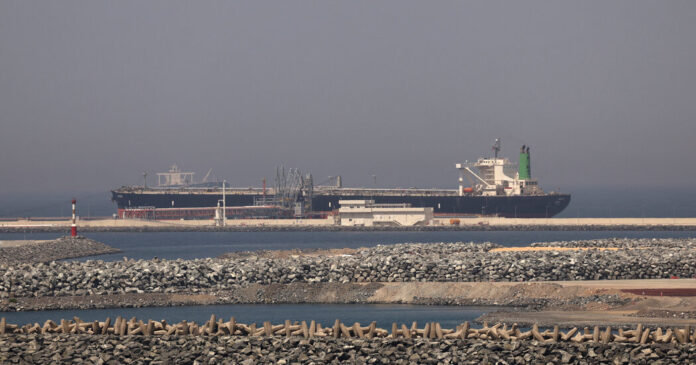

Iran defended its demands in negotiations to end the war with the United States and Israel on Monday, hours after President Trump had denounced the latest Iranian position as “TOTALLY UNACCEPTABLE” on social media.
Esmail Baghaei, the Iranian foreign ministry spokesman, told reporters that Iran did not “demand any concessions” but rather asserted the country’s “legitimate rights.” He added that Iran’s proposal would have ensured safe passage through the Strait of Hormuz, which Iran has effectively blockaded since the U.S.-Israeli attacked Iran in late February.
Mr. Baghaei’s said that Iran had made “generous” and “reasonable and responsible” requests. But Iran’s own state broadcaster recounted a series of uncompromising conditions on Monday.
According to Iranian state media, Iran had called for the U.S. to pay “war damages” to Tehran and recognize Iranian sovereignty over the Strait of Hormuz. Both are likely non-starters for the United States, which has called for an end to Iran’s grip over the strait, a critical passage for oil and gas.
Mr. Trump had initially conditioned the ongoing temporary cease-fire with Iran, which began last month, on free transit for ships through the strait. But Iran still insists that any ships that traverse the Persian Gulf waterway do so in coordination with its forces, and Mr. Trump has repeatedly pulled back from his threats to attack Iran in protest.
Last week, Mr. Trump announced a U.S. military effort to free ships trapped in the maritime bottleneck by the war, dubbed “Project Freedom.” But roughly a day later, the effort was abruptly suspended to allow for further negotiations and has not resumed.
The Iranian counterproposal also demanded that the U.S. end its punishing economic sanctions against Iran, Iranian state media said. Analysts said that it was unlikely unless U.S. officials received major concessions on Iran’s nuclear program in exchange, compromises which Iran has so far ruled out.
Iranian officials are facing pressure at home to reach a deal. Before the war, U.S.-led sanctions had squeezed Iran’s currency, the rial, igniting demonstrations that quickly spiraled into a mass movement calling for the ouster of the Islamic Republic. Iranian security forces violently quelled the protests, killing thousands.
Since the war, Iran’s economic position has only grown more dire amid U.S.-Israeli attacks on Iranian industry, as well as a government-imposed internet blackout. An Iranian government official, Gholamhossein Mohammadi, estimated that the war has caused the loss of one million jobs, “and the direct and indirect unemployment of two million people,” in comments reported by the news outlet Tasnim.
But Iran experts say the Iranian approach reflects a newly emboldened leadership that believes it survived a concerted effort by the United States and Israel to oust it.
“One thing is clear: the Iranian regime’s reply reflects the mind-set of a leadership that believes it survived the war and won, not that it lost it,” Danny Citrinowicz, a former senior Israeli military intelligence officer who worked on Iran, wrote on social media. “As a result, its demands remain high and its willingness to compromise is extremely limited.
Both Mr. Trump and Prime Minister Benjamin Netanyahu of Israel have demanded control of Iran’s stockpiles of enriched uranium, which they fear could form the basis for a nuclear weapon. Iran has offered varying solutions to the problem, but, at least publicly, has ruled out U.S. control of the material.
Mr. Baghaei sidestepped the impasse over Iran’s nuclear ambitions on Monday, saying merely that Iranian officials would “discuss that when the time comes.”
”
Leo Sands contributed reporting.