

Mumbai:
Declaring that Mumbai must move beyond the era of slums and fragmented growth, Maharashtra Deputy Chief Minister Eknath Shinde on Thursday outlined an ambitious vision to make the country’s financial capital slum-free through large-scale cluster redevelopment, integrated infrastructure planning and mass housing creation. The government is targeting nearly 15 lakh rehabilitation homes by 2030.
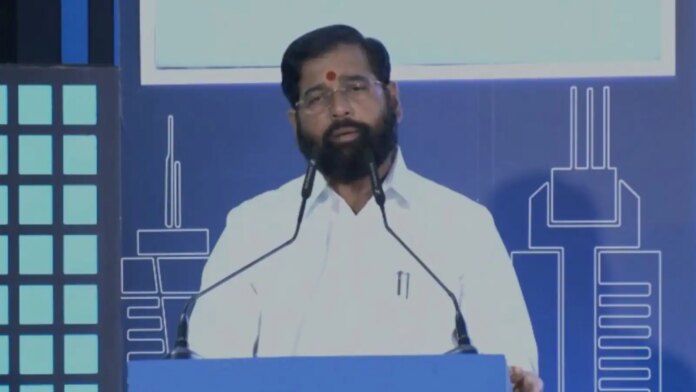
Speaking at the Maharashtra Infrastructure Conclave in Mumbai, Shinde said the government has already formed 19 cluster redevelopment zones across the Mumbai Metropolitan Region and is pushing a coordinated redevelopment model that will transform congested settlements into planned urban neighbourhoods with wide roads, gardens, playgrounds, schools and modern civic amenities.
“Mumbaikars should not be forced to live in inhuman conditions near nullahs and in areas with inadequate sanitation. The government has taken the responsibility to change this reality and ensure every eligible citizen gets a proper home,” Shinde said, referring to the poor living conditions in several slum pockets, including Dharavi.
He said the redevelopment push is being implemented through a multi-agency approach involving the Mumbai Metropolitan Region Development Authority, Maharashtra Industrial Development Corporation, City and Industrial Development Corporation, Slum Rehabilitation Authority and Maharashtra Housing and Area Development Authority, all working in tandem to realise the vision of a slum-free Mumbai.
Shinde said the cluster redevelopment model is aimed at unlocking land parcels while simultaneously creating better urban infrastructure and improving the quality of life for lakhs of residents. “This is not just the redevelopment of buildings. It is a redevelopment of lives and of entire neighbourhood ecosystems,” he said.
Highlighting the scale of the transformation underway, officials at the conclave said Mumbai is expected to gain nearly 300 hectares of open spaces through projects such as the promenade and racecourse development initiatives.
The deputy chief minister also pointed to the successful redevelopment of the BDD chawls as an example of the government’s intent to modernise ageing housing stock through planned redevelopment.
Speaking at the conclave, Chief Executive Officer (CEO) of the Slum Rehabilitation Authority (SRA) in Mumbai, Mahendra Kalyankar, said the SRA alone is expected to add nearly seven lakh rehabilitation housing units by 2030, compared to approximately 2.9 lakh units created in the nearly two-and-a-half decades since the authority’s formation.
Dr Kalyankar said nearly 1.5 lakh rehabilitation units are planned in Dharavi, where sanitation and housing conditions remain a major challenge, with some areas having one toilet for nearly 1,000 residents. He added that the Dharavi Experience Centre is expected to be ready by August 15 and spoke about plans for Mithi river beautification and Dharavi emerging as a multimodal transport hub integrating airports, suburban rail, Metro corridors, long-distance trains and the BEST network.
Shrikant Shinde said agencies, including the Brihanmumbai Municipal Corporation, MHADA, CIDCO and SRA, are jointly driving cluster redevelopment projects across the region.
Shinde said Mumbai has already emerged as the country’s leading destination for foreign direct investment, startups and infrastructure creation, and stressed that world-class urban transformation would be critical to sustaining the city’s economic leadership in the coming decades.