
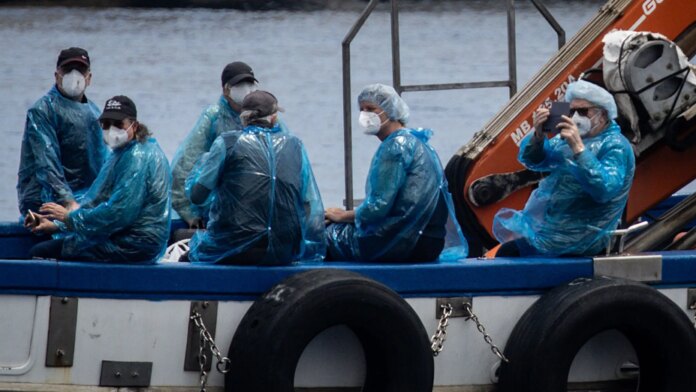

The virus is typically associated with rodents, but it may have passed from human to human aboard the vessel, according to the World Health Organization (WHO). WHO officials said Sunday that the risk to the public remains “low,” even as the president of the Canary Islands opposed the ship’s docking, citing fear of infection risk and potential harm to the tourism economy.
“So they shouldn’t be scared and they shouldn’t panic,” WHO Director-General Tedros Adhanom Ghebreyesus said of the public on Sunday. Officials added that quarantine must continue in each passenger’s home country in order to ensure the disease does not spread.
“The Andes virus has a long incubation period and we cannot be sure that they will not have symptoms if they do not pass the 42 days,” Diana Rojas, head of high-impact diseases, told the media.
U.S. states prepare for passengers
Seven U.S. states are currently preparing for the arrival of 17 Americans who were aboard the ship. Those Americans will first arrive at the National Quarantine Unit, a facility on the campus of the University of Nebraska Medical Center in Omaha, which is the only federally funded quarantine unit in the U.S. and is designed to monitor people exposed to “high-consequence infectious diseases.”