
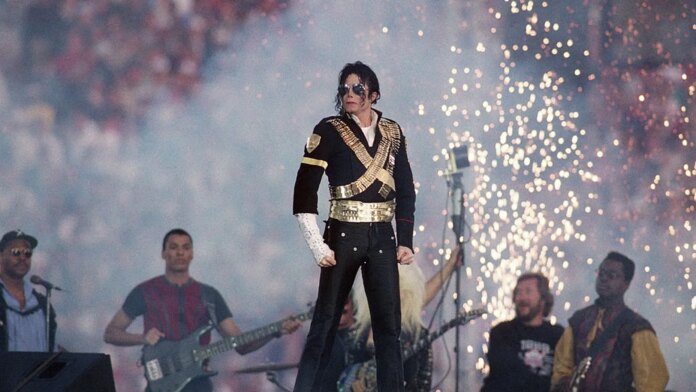

An assessment of Michael Jackson’s life starts with a familiar American story—one rooted in the Great Migration, when many Black families carried their hopes northward in search of dignity and steadier work. Michael’s father, Joseph, was born in Arkansas, met his wife, Katherine, in East Chicago in 1949, and in 1950 the couple set out for Gary, Indiana, where Joe found a job and set aside his own music ambitions to catapult his sons into the limelight. At first, the Jackson 5 performed in community shows in northern Indiana, and then on amateur show circuits from Chicago to Harlem. Joe drilled into his sons a disciplined, nearly militaristic pursuit of perfectionism, because the stakes were high: Black kids had to be twice as good to succeed.
So the Jackson 5 embodied that aspiration: polished, electrifying, tight, and still soulful. They also personified Motown’s “Sound of Young Amer-ica” strategy, which used pop-soul as a subversive racial integration tool. Black families across America felt a collective pride. My mom still talks about the night she trailed her older sister into a Jackson 5 concert in New Orleans, swept up in the miracle of seeing young men who gloriously looked like them commanding a stage in a country that insisted it wasn’t theirs. By the early 1970s, as a young teen, Michael had become the group’s undeniable star. It was his rare combination of innocence and command of pitch, dynamics, and tone that convinced Motown’s founder, Berry Gordy, to launch him into solo recordings with “Got to Be There.” But it was Off the Wall, produced by Quincy Jones in 1979, that unlocked Michael’s genius. The album delivered some of his most powerful, captivating songs, and on the tour and videos that followed, Jackson was the ultimate showman. Steeped in Motown’s soulful elegance, sharpened by Jones’ precision, and driven by instinct, Jackson fused funk, R&B, rock, gospel, and dance into something unmistakably American and Black—and yet a funhouse-mirror version of Michael Jackson, a distorted silhouette so vivid it began to overshadow the man himself.