

New Delhi:
Bangladesh, the youngest nation in South Asia, has taken a major step into the nuclear age, bringing South Asia’s energy landscape closer to a significant shift. Its first nuclear reactor has achieved a self-sustaining nuclear chain reaction, marking a historic milestone in the country’s technological development and ambitions for energy security. The development puts Bangladesh on the path to joining the world’s nuclear electricity-producing nations.
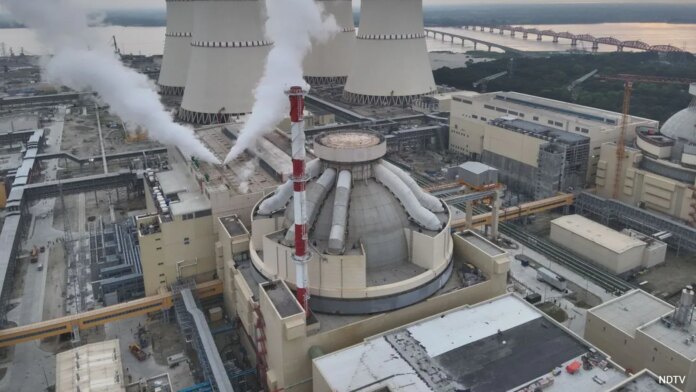
On October 11, 2026, Unit 1 of the Rooppur Nuclear Power Plant achieved first criticality, marking the beginning of a sustained nuclear chain reaction inside the reactor core. The milestone is among the most important in a nuclear power plant’s commissioning process. However, first criticality does not mean that the plant is already generating electricity for commercial use. Further testing, a gradual increase in reactor power and subsequent grid-connection procedures must be completed before electricity can be supplied to consumers.
Located about 250 kilometres from Kolkata, Rooppur is a major development for South Asia. India’s Nuclear Power Corporation of India Limited (NPCIL) has also trained Bangladeshi nuclear engineers, adding an Indian dimension to the project.
Photo Credit: NDTV
In several respects, the Bangladeshi reactor represents a technological step forward from India’s Kudankulam Nuclear Power Plant, which uses the earlier VVER-1000 design. While Kudankulam’s reactors remain important components of India’s nuclear power programme, the VVER-1200 incorporates a newer generation of safety systems, drawing on lessons from major nuclear events, including the Fukushima disaster. The VVER-1200 is widely regarded as one of the more advanced commercial light-water reactor designs available.
READ | “Tech Issue”: Pak Denies Airspace For Bangladesh’s Nuclear Fuel Transport
The development is particularly striking against the broader South Asian nuclear landscape. India remains the region’s largest nuclear power producer, operating reactors at Tarapur, Rajasthan, Kakrapar, Kaiga, Narora, Kudankulam and other locations. India’s installed nuclear power capacity stands at 8.78 GW, and New Delhi has set an ambitious target of expanding it to 100 GW by 2047.
Achieving that goal will require major investments, new reactor construction and policy reforms. These include changes to India’s nuclear liability framework and the provisions of the Sustainable Harnessing of Advancement of Nuclear Energy for Transforming India (SHANTI) Act, 2025. The legislation opens the nuclear energy sector to wider private-sector participation. The challenge now is to translate that legal opening into investment, construction and operational capacity at the scale envisaged by the government.
Pakistan, meanwhile, operates nuclear power stations at Chashma and Karachi, including newer Chinese-built reactors. Nuclear energy has become an increasingly important component of Pakistan’s power generation mix. It houses 6 atomic plants generating about 3500 MW of power.
Yet it is Bangladesh, the youngest nation in South Asia, that is now approaching the operational phase of the region’s newest large-scale nuclear power project. Once both Rooppur units enter service, Bangladesh will have 2,400 MW of installed nuclear generating capacity, enough to make nuclear power a significant pillar of its electricity system.
The achievement is notable because Bangladesh emerged as an independent nation only in 1971 and is now preparing to enter the nuclear electricity sector with Generation III+ technology. While India and Pakistan began operating nuclear power plants decades ago, Bangladesh’s first nuclear station is based on a modern reactor design incorporating advanced safety systems.
READ | Bangladesh Enters Nuclear Era As 2,400-MW Power Plant Begins Fuel Loading
Rooppur: A $12.65 Billion Nuclear Project
Located about 160 kilometres from Dhaka, the Rooppur Nuclear Power Plant consists of two Russian-designed VVER-1200 reactors with a combined installed capacity of 2,400 MW. Each reactor is designed to generate 1,200 MW of electricity, making Rooppur one of South Asia’s largest nuclear power projects.
The facility is being built by Russia’s state nuclear corporation Rosatom under a general contract signed on December 25, 2015. The journey began in February 2011, when Russia and Bangladesh signed an intergovernmental agreement for the project. The estimated value of the original project contract was about US$12.65 billion.
Construction of Unit 1 began in November 2017, followed by Unit 2 in July 2018.
The first shipment of nuclear fuel arrived at the site in October 2023, marking a major step towards commissioning. In May 2026, all 163 nuclear fuel assemblies were loaded into the Unit 1 reactor core. The Bangladesh Nuclear Regulatory Authority issued an operating licence on April 16, 2026, paving the way for the next phase of commissioning.
According to Rosatom, achieving first criticality confirms that a controlled, self-sustaining nuclear chain reaction is taking place inside the reactor core. The process involves a series of technical operations and checks conducted in accordance with the plant’s design specifications and commissioning programme, under the supervision of the operator, the regulator and technical specialists.
This stage is one of the most important milestones in bringing a nuclear power plant into service because it demonstrates that the reactor can sustain a nuclear chain reaction. It does not, however, establish that all systems have completed testing or that electricity is already being supplied to the grid.
The next phase involves testing the reactor at different power levels.
Rosatom Director General Alexey Likhachev described the achievement as “an important milestone in the construction of Rooppur NPP Unit 1 and a major achievement for the entire project team”.
He said that, following the successful completion of this phase, the unit would be prepared for power start-up and subsequent connection to Bangladesh’s national power grid. Rosatom has indicated that it expects the power start-up phase to begin before the end of November.
READ | 40 Years After Chernobyl Disaster, Scientists Find Radioactive Particles Surprisingly Stable
According to the project schedule, the first electricity from Rooppur Unit 1 is expected to reach the national grid around November 20. Before that happens, engineers will perform an extensive series of safety verifications, equipment inspections and commissioning trials as the reactor power is gradually raised from its current level.
What Makes The VVER-1200 Different?
Rooppur’s significance for South Asia lies partly in the technology it employs. The VVER-1200 is Rosatom’s flagship Generation III+ reactor design, incorporating multiple active and passive safety systems, advanced containment features and enhanced accident-management capabilities.
Rosatom says six VVER-1200 units are already operating worldwide, with four in Russia and two in Belarus. Similar reactors are also being built in Egypt, Hungary, Turkey and China.
For Bangladesh, the adoption of this technology represents a substantial leap in its electricity infrastructure. The country is moving directly into the era of modern reactor technology rather than beginning its nuclear programme with older-generation designs. The comparison with India and Pakistan is therefore significant, although their longer experience of operating nuclear plants remains an important distinction.
Bangladesh sees Rooppur as much more than a power project. Officials describe it as a strategic investment in energy security, economic development and climate goals. The plant is expected to diversify the country’s electricity sources, reduce dependence on imported fossil fuels and provide a stable supply of low-carbon electricity for decades.
The Engineering Division responsible for the plant says international projects account for approximately 80 per cent of its revenue and that the division currently holds the world’s largest nuclear construction portfolio. Rooppur is seen as a flagship example of Russia’s continuing role in exporting advanced civilian nuclear technology to developing economies.
For Bangladesh, the larger significance is national. Fifty-five years after independence from Pakistan, the country has reached a major milestone in developing the infrastructure, regulatory framework and technical expertise needed to operate its first nuclear power plant.
As Rooppur moves towards grid connection, Bangladesh is approaching entry into the group of countries that generate electricity from nuclear power. The project represents a significant expansion of the country’s technological capabilities and could reshape its electricity mix over the coming decades.