

New Delhi:
India is facing an intense heatwave, with several states reporting temperatures above 45 degrees Celsius and widespread alerts issued by the India Meteorological Department.
But the bigger concern this year is not just extreme daytime heat. Nights are also turning unusually warm, reducing the body’s ability to recover after sunset.
The India Meteorological Department has warned that “warm night” conditions are likely across parts of Delhi, Haryana and Uttar Pradesh, with minimum temperatures expected to remain between 26 and 29 degrees Celsius for several days.
Delhi’s Nights Getting Hotter
In Delhi, nighttime temperatures through April have frequently stayed above both recent averages and long-term normal levels, indicating an early and sustained shift in seasonal patterns.
Data from the India Meteorological Department shows that, on most days this month, minimum temperatures exceeded both the 2020-2025 average and the long-term baseline (1991-2020).
From mid-April onwards, Delhi began recording unusually warm nights. Several days saw minimum temperatures crossing 22 degrees Celsius, with readings peaking at nearly 28.5 degrees Celsius on April 29. The warming became more pronounced after April 15. Between April 18 and April 29, nighttime temperatures stayed above the long-term average on almost every day and repeatedly breached normal limits.
Such values are typically recorded closer to late May, not in April.
Warm Nights Across Regions
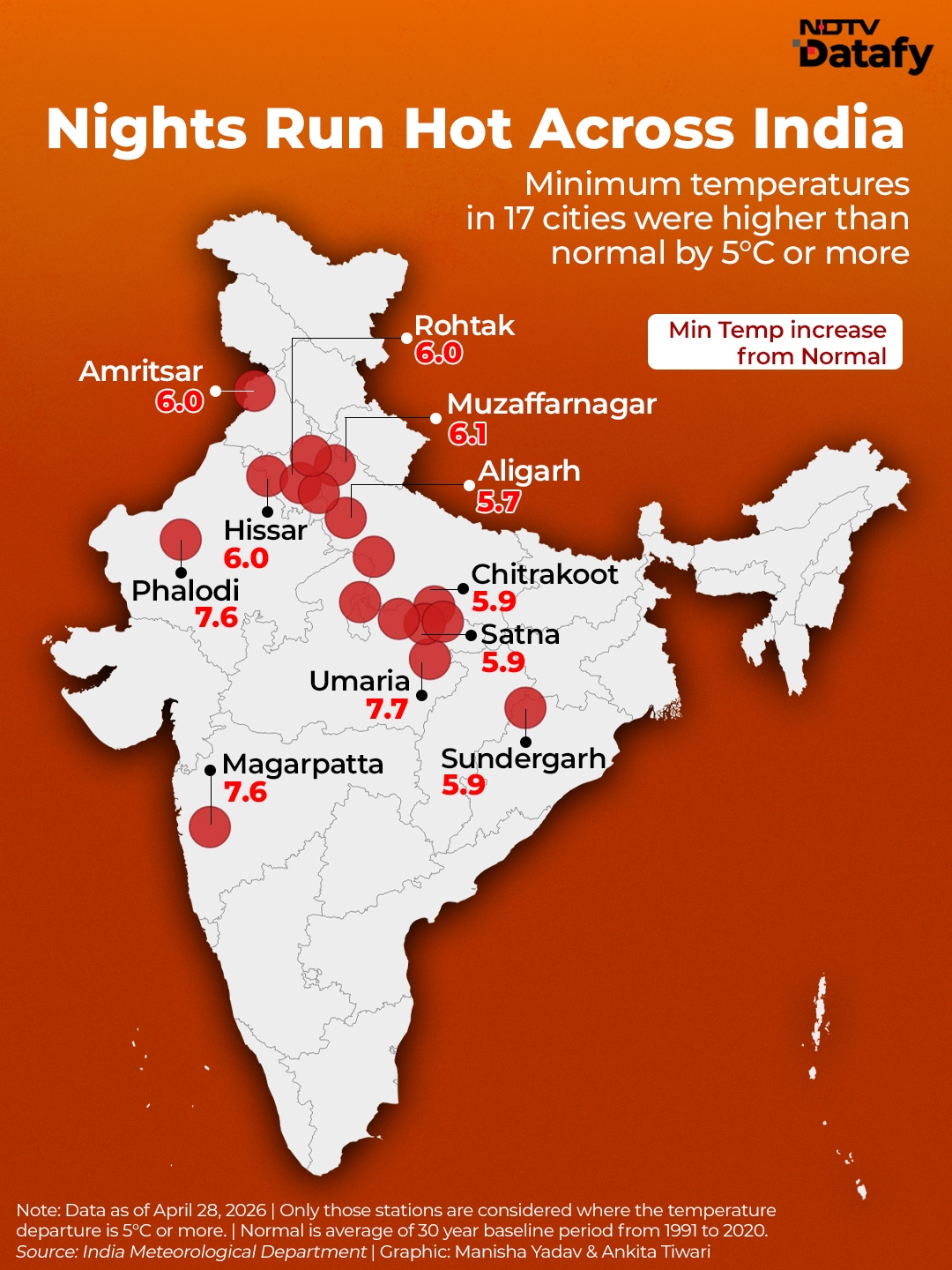
The pattern is not limited to Delhi. Across the country, at least 17 stations recorded minimum temperatures more than 5 degrees Celsius above normal.
The highest departures were reported in:
Umaria (Madhya Pradesh): 7.7 degrees Celsius above normal
Phalodi (Rajasthan): 7.6 degrees Celsius above normal
Muzaffarnagar (Uttar Pradesh): 6.1 degrees Celsius above normal
Other stations showing similar significant departures included Amritsar, Hisar and Rohtak (6 degrees Celsius each), followed by Chitrakoot, Satna and Sundergarh (5.9 degrees Celsius each). These readings indicate unusually warm night-time conditions across parts of north, central and eastern India.
These figures point to widespread elevation in night-time temperatures across north, central and eastern India.
Why ‘Warm Nights’ Are Concerning
According to the Met Department, persistently high minimum temperatures increase heat stress, even if daytime readings ease slightly.
“Warm nights are worrying because heat keeps building up,” an official said.
When nights remain hot, the body has limited time to cool down, increasing health risks, particularly for older people, outdoor workers and those living in poorly ventilated conditions.
The India Meteorological Department’s summer outlook for 2026 indicates that above-normal minimum temperatures are likely across most parts of the country.
This suggests that even where cloud cover or storms briefly reduce daytime heat, nighttime temperatures may continue to remain elevated.