
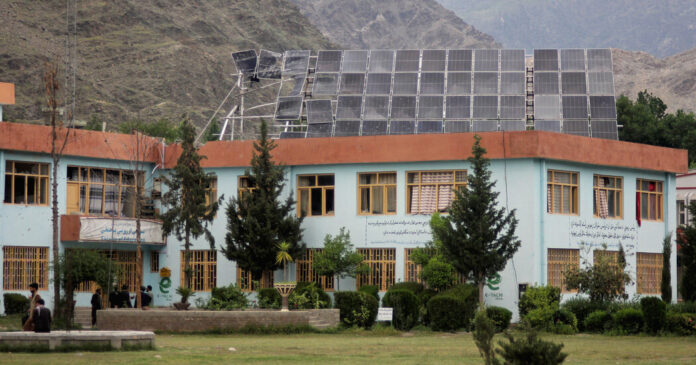

Afghanistan accused neighboring Pakistan of shelling Afghan civilian areas in the country’s east on Monday, including a university campus, in strikes that officials said killed at least four people and wounded 70 others.
The United Nations’ mission in Afghanistan confirmed that a university in the eastern city of Asadabad had been struck, but it did not name the university or say who was responsible.
Afghan officials said the attacks had come from Pakistan, which has struck dozens of locations across at least nine provinces of Afghanistan since late February.
Hamdullah Fitrat, a spokesman for the Taliban government in Afghanistan, said 30 students were among those wounded by the artillery shelling on Monday. All the victims were civilians, Mr. Fitrat said.
Pakistan has denied targeting civilians in its military campaign against Afghanistan. In a statement posted on X, Pakistan’s government called the accusation that it had hit a university on Monday “a blatant lie.” The Pakistani military also declined to answer questions about whether it had hit any targets in Afghanistan.
Pakistan has accused the Taliban government of harboring and supporting a terrorist group, Tehreek-e-Taliban, also known as the Pakistani Taliban, which has killed thousands of civilians and security personnel in Pakistan in recent years.
The Taliban government has denied hosting any terrorist group, although there is widespread consensus among neighboring countries and international organizations that it does.
The strikes on Monday appeared to have been the first since both countries met for peace talks in China this month, after Pakistan declared an “open war” on Afghanistan in late February.
Students at Kunar University, in the city of Asadabad in eastern Afghanistan, described a sudden explosion on Monday that rattled them out of classrooms and dormitories, where some were taking a break from the afternoon heat.
Several explosions followed around the university, according to Ahmad Suhail Rahmani, an English literature student, who said he had been resting in his room.
“That university is a place of gathering, hope and a better future for us, but now everyone is trying to flee from it,” said Mr. Rahmani.
Sajid Iqbal Safi, a student in the university’s Faculty of Education, said, “Students were shouting and screaming, and no one understood what was happening.”
For weeks, Pakistan has been acting as a peacemaker between the United States and Iran, but it has been in an open war with the Afghan government since late February.
The Pakistani military has hit dozens of military installations across Afghanistan. It has also struck hit hundreds of businesses and dozens of mosques and schools, killing hundreds of civilians, according to the Afghan authorities and the U.N. mission in Afghanistan.
On March 16, at least two Pakistani airstrikes killed about 240 patients at a drug rehabilitation center in Kabul, the capital, according to the U.N. mission.
Asadabad, the capital of Kunar Province, is a city of more than 40,000 people. The strikes on Monday hit isolated villages in the province, creating panic among residents.
Residents said they had spent the night in their fields out of fear that buildings might again be hit.
Nawshad Alokozai, a resident of the Sarkano district, whose village was hit in Monday’s strikes, said military installations nearby appeared to be intact. Reached by phone on Tuesday, Mr. Alokozai, 30, said, “No one dares to enter their houses.”
Pakistan’s airstrike campaign in Afghanistan has compounded a dire situation. Afghanistan was already grappling with a severe humanitarian crisis that worsened over the past year because of U.S. aid cuts and the forced returns of about three million Afghans from Iran and Pakistan.
Pakistan also closed its border in October, cutting Afghanistan off from its main trading partner.
Half of Afghanistan’s population, nearly 22 million people, are expected to be in need of humanitarian assistance this year, according to the United Nations.
Yaqoob Akbary contributed reporting from Kabul, Afghanistan.