

In 2024, the United States extended a $20 billion swap arrangement to Argentina during a turbulent period in that country. The move helped stabilise the Argentine currency, the peso, prevented a sharp devaluation and restored confidence in financial markets. The principle is to provide temporary access to dollars, calm the system and withdraw support once stability returns. It is not at all a tool designed for reassurance or rescue.
Wealthy Gulf nations, including the United Arab Emirates (UAE), are asking Washington for a similar swap arrangement amid the war in West Asia. Not in aid, but in access to US dollars. It would have been unthinkable that oil-rich Gulf states, which have carefully built a reputation as investment magnets, would seek US financial assistance – not in the form of loans, but by requesting billions of dollars in exchange for dirhams until the impact of the Iran war subsides.
Advertisement – Scroll to continue
US Treasury Secretary Scott Bessent has revealed, what was being quietly discussed behind the scenes, that “many” American allies in the Gulf and Asia want what are known as currency swap lines. It is not hard to understand why these rich countries need America’s help. But, in times of crises, even wealthy nations can find themselves knocking on America’s door.
The OPEC Bombshell
The UAE on Tuesday dropped a bombshell, announcing it will walk out of OPEC and OPEC+ on May 1. The move comes against the backdrop of the Iran war, which has disrupted flows through the Strait of Hormuz and shaken global energy markets and amid its ongoing talks with the US over currency swap lines. It clearly means national survival now outweighs continuing to be part of the oil cartel.
With energy prices already quite high, Abu Dhabi wants maximum flexibility to pump more if routes reopen, reroute flows, or deploy supply in line with its own security and economic interests rather than collective quotas. Its engagement with Washington on currency swaps points to a deeper shift, aligning more closely with the US financial and security umbrella as regional risks intensify. In effect, the UAE is hedging on two fronts: breaking free from OPEC+ constraints in oil while securing dollar liquidity in finance. It means that in a war-torn market, agility and alliances matter more than bloc loyalty. Saudi Arabia will be watching with unease.
For now, let’s focus on the dollar question. The war on Iran is no longer a story of missiles and military strategy. It is slowly turning into a story about the global scramble for US dollars. The conflict has, as we know already, disrupted one of the most critical arteries of the global economy: the Strait of Hormuz. This narrow stretch of water carries over 20% share of the world’s oil and gas traffic.
Gulf’s Concerns Are America’s Too
For Gulf economies, this is not a distant concern. It is existential. Their financial systems are deeply tied to oil income, and their oil exports are priced in US dollars. The system that took shape in the 1970s has made US treasuries and the dollar the most attractive destinations for countries to park their surplus capital. When that income is choked, everything else begins to strain: government spending, banking liquidity, and currency stability, etc.
The UAE seems to be telling Washington: our dollar reserves are being depleted fast (by as much as $120 billion and counting), and the pressure is building because we are unable to export in US dollars at pre-war levels. If this continues, we will be left with little choice but to shift trade into the Chinese Yuan, a currency the US is actively trying to contain.
The UAE has also reportedly told the US that it was they who started the war, a conflict that the UAE did not want. In response, Washington is signalling willingness, but stopping short of commitment, keeping the door open, while making it clear that access to dollar lifelines is a privilege, not a right
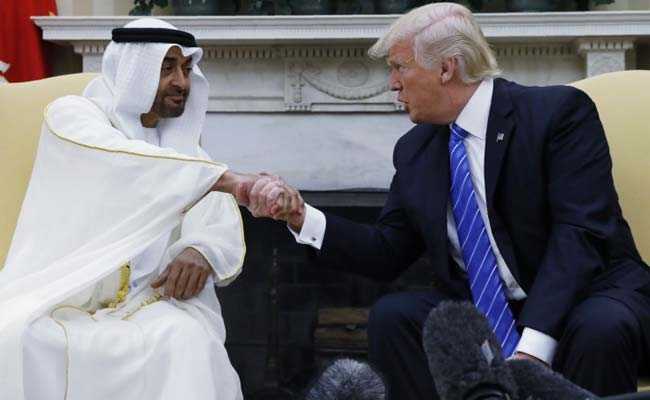
So, this is not just the Gulf’s problem. It is very much America’s as well. If the US wants to preserve the dominance of the dollar, it has a clear interest in stepping in to support its Gulf allies. And this is what the Trump administration has been mulling.
What Is A Currency Swap Line?
A currency swap line is essentially an agreement between two central banks, mostly involving the US, that allows one country to access US dollars in exchange for its own currency. It is like a financial safety valve. If a country such as the UAE needs dollars urgently, its central bank can temporarily swap the dirham with the US Federal Reserve and receive dollars in return. Later, the transaction is reversed at a pre-agreed rate.
No permanent transfer. No aid. You can say it is just liquidity on demand. But that liquidity can make all the difference, because, in a crisis, the problem is often not wealth, it is access. A country may have assets, reserves and long-term strength, but if it cannot quickly obtain dollars to meet immediate needs, panic can spread.
Swap lines prevent that panic.
Why Dollars Matter So Much
To understand the urgency of the Gulf’s requests, we must grasp a simple truth: in the age we live in, the US dollar is the backbone of the global economy. As mentioned earlier, oil is priced in dollars. International trade is settled in dollars. Governments hold reserves in dollars. Financial markets run on dollars.
The dollar is not just a currency. It is the system itself.
For Gulf countries, this dependence is even deeper. Their currencies, including the UAE’s dirham, are often pegged to the dollar. That means their stability depends directly on maintaining enough dollar reserves. If those reserves begin to dwindle, the consequences can be severe. A currency peg can break. Inflation can rise. Confidence can collapse.
This is why Scott Bessent framed swap lines not as a favour, but as a stabilising tool: a way to “maintain order in dollar funding markets” and prevent chaotic sell-offs of US assets. Imagine this: if countries cannot get dollars easily, they may start selling their prime assets, US bonds, in a rush. That could cause an earthquake in the world’s largest economy.
Why A Rich Nation Like UAE Is Asking For Help
At first glance, it may seem surprising that a country like the UAE, one of the richest per capita in the world, is seeking financial backstops. But wealth in the modern economy is how quickly you can access it and in what form. A large portion of national wealth is tied up in long-term investments: infrastructure, sovereign wealth funds, or overseas assets. These are not easily converted into cash overnight, especially during a crisis when markets are volatile.
Meanwhile, immediate obligations continue. Banks will continue to need liquidity. Governments will need to pay for imports. Energy disruptions reduce income at the worst possible moment. A swap line, therefore, acts like a bridge. It is like carrying a country across a temporary but dangerous gap.
Conditions Apply
From Washington’s point of view, the decision is not going to be easy. President Trump has signalled openness to helping allies such as the UAE. On one level, this aligns with long-standing US strategy: maintaining stability in global markets and supporting key partners. But there is a potential domestic political cost.
Americans are already facing higher prices for fuel, food and everyday essentials because of the impact of the war, which America started. Against that backdrop, extending financial support to wealthy foreign nations can be difficult to justify politically. Critics, particularly among Democrats, have seized on this tension. Senator Chris Van Hollen has pointed out that the war is costing the US over a billion dollars a day, while consumers at home are feeling the squeeze. An ordinary citizen, who has nothing to do with Iran, would ask, why should American resources be used to support countries that, at least on paper, are far richer?
There are also concerns about political relationships, investments, and influence, questions that hover over any major financial arrangement between governments
Looking at the history, the US does not extend swap lines to every ally who asks. There is a clear hierarchy. These arrangements are often made with countries that matter to the US strategically. Allies that hold large amounts of US assets, buy American weapons, host military bases or sit at critical energy chokepoints tend to get priority. In simple terms, access to dollars follows influence. The UAE ticks many of these boxes. It is deeply integrated into global finance, closely aligned with US security interests. It sits at the heart of global energy flows. That is why Washington is even considering stepping in. Plus the UAE threat to use the Chinese Yuan has made the US sit up and take note.
But there are limits on the US side. The US Federal Reserve is cautious about extending such support beyond a small circle of trusted partners because every swap line expands America’s exposure. It is not charity but a calculated risk. It’s being reported in the US media that many Congress members are also not in favour of extending the swap lines to Gulf nations, which they say are quite wealthy and can look after themselves
However, what makes this moment more complicated is the overlap between geopolitics and personal business interests. Trump’s family ecosystem has deep financial links with the Gulf. The Trump Organization is expanding projects in Dubai, including a new Trump Tower, while Gulf-linked funds have invested billions into ventures connected to the Trump family. Reports also point to large investments from UAE-backed entities into Trump-linked businesses and funds, blurring the line between state relationships and private gain. At the same time, Trump has openly said he is willing to consider financial support for the UAE, describing it as a key ally. This, of course, raises an uncomfortable question. When the US decides who gets access to dollar lifelines, is it purely strategic, or is it also shaped by who has access to the White House in more ways than one?
What Comes Next
Much depends on how the West Asia conflict evolves. If tensions ease and oil flows resume through the Strait of Hormuz, the pressure on Gulf economies may fade gradually. Dollar demand will stabilise. Swap lines may become unnecessary.
But if the war drags on, requests for financial backstops are likely to grow. They will come from not just the Gulf, but from other regions affected by energy shocks and market volatility. And at that point, the question, being asked in America, will become even sharper. How far is the US willing to go in being the world’s financial safety net? You know the answer, don’t you?
(Syed Zubair Ahmed is a London-based senior Indian journalist with three decades of experience with the Western media)
Disclaimer: These are the personal opinions of the author