

New Delhi:
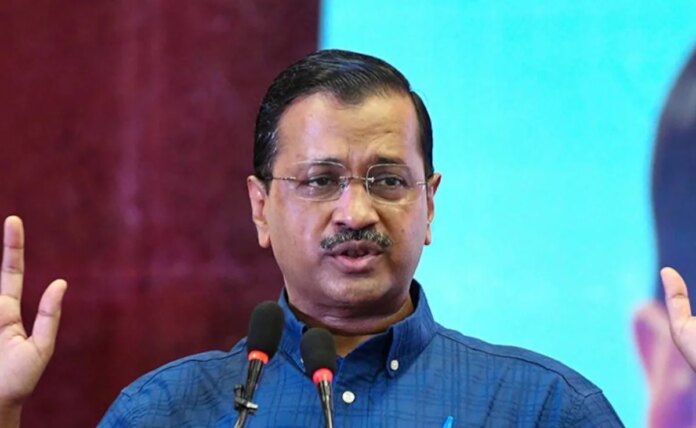
Aam Aadmi Party (AAP) national convenor Arvind Kejriwal has written to the Delhi High Court’s Justice Swarana Kanta Sharma, stating that he will neither appear before her in person nor through legal counsel in proceedings linked to the alleged Delhi liquor policy case, stating that he has lost hope of getting justice from the judge and will follow Mahatma Gandhi’s path of “Satyagraha”.
Kejriwal emphasised that his faith in the judiciary as an institution remains intact, even as he raises apprehensions about fairness in the present case.
Here’s the full text of Arvind Kejriwal’s letter to Justice Swarna Kanta Sharma:
To
Hon’ble Justice Swarana Kanta Sharma
Judge, High Court of Delhi
Subject: Inability, in conscience, to participate in further proceedings in Crl.Rev.P. 134/2026 before this Hon’ble Court.
Hon’ble Madam,
1. I write this letter with utmost respect to your office and to the institution of the judiciary, which has for decades stood as one of the principal sentinels of our great Republic. At the very outset, I wish to state clearly and unambiguously that this letter is not written in anger, nor in disrespect, nor in any spirit of personal confrontation with Your Ladyship. On the contrary, it is written with pain, with humility, and with an abiding faith in the role of judiciary. This letter touches upon a larger and more enduring question: the faith of ordinary citizens in the impartiality of the judicial process.
2. Over the last 75 years, whenever other institutions of the State have faltered, the people of India have repeatedly looked to the judiciary with hope. Time and again, the judiciary has protected constitutional values, restrained excesses, and preserved the rights of citizens. My only interest in writing this letter is the strengthening of judiciary, and prevent its weakening.
3. It was in that spirit that I had earlier approached this Hon’ble Court by way of an application seeking recusal in the above referred case. I did so because there existed in my mind a genuine apprehension regarding whether justice would not only be done, but also be seen to be done in the present case. After the dismissal of that application by order dated 20 April 2026, I have reflected deeply on the course now open to me. My well-grounded apprehensions, I say with utmost respect, have not been removed. After the said judgment, I am left with the painful and inescapable impression that what I had urged as a lawful plea of apprehension was received and answered as a personal attack upon Your Ladyship and as an assault on the institution itself. Those are not, with respect, answers to the case I had brought. They show me that my plea of apprehension has been judicially understood as a personal and institutional affront. That understanding itself now makes it impossible for me to believe that I can receive a hearing which appears impartial in this Court.
4. I am drawn to the teachings of Mahatma Gandhi ji, who taught this country the principle of Satyagraha, that when a citizen senses injustice, his first duty is not defiance, but dialogue. By first placing the perceived injustice before the authority competent to correct it, he must give that authority a fair opportunity to reflect and rectify. Then he must examine his own motives, purge his heart of anger and ill-will, and prepare himself to bear the consequences of any stand he may take. Only thereafter, if his conscience still tells him that the injustice remains unaddressed, may he, with humility and non-violence, offer satyagraha and submit himself to the consequences. That is the discipline of Satyagraha. It is not rebellion born of hatred, nor defiance born of ego. It is the quiet insistence of conscience, expressed with civility, restraint, and a willingness to suffer.
5. It is in that spirit, and in that spirit alone, that I write to Your Ladyship today.
6. In my recusal application, I had placed several concerns before this Hon’ble Court through the lawful process. I reiterate here the following two most important concerns. First, the issue of Your Ladyship’s repeated public association with the RSS’s legal front, the Akhil Bharatiya Adhivakta Parishad (ABAP)-an organisation belonging to the ideological ecosystem of the ruling dispensation. Politically, we have been the staunchest opponents of the ruling dispensation at the Centre. Ideologically, myself and my party are strongly opposed to RSS ideology. When Your Ladyship has been frequently attending their programmes, how can I hope to get justice from this Hon’ble Court?
I may also respectfully note that the concern I had expressed is not wholly alien to judicial ethos. Former Hon’ble Mr. Justice Abhay S. Oka recently stated publicly that, had he been invited by Adhivakta Parishad while serving as a sitting judge, he would have politely declined because, in his understanding, the organisation had political inclinations. I refer to this only to indicate that the apprehension I expressed was neither fanciful nor idiosyncratic.
7. Secondly, a direct and far more serious issue of conflict of interest, comes from the fact that both of Your Ladyship’s children are professionally engaged on multiple advocates’ panels of the Union Government. Union Government’s CBI happens to be our opposite party in this case. Mr Tushar Mehta, the Solicitor General is the advocate on the opposite side. Both children of Your Ladyship are directly assigned cases by Mr Tushar Mehta. Mr Tushar Mehta decides how many and which cases should be assigned to Your Ladyship’s children. If more cases are assigned to them, they get more fees. The RTI material that I had verified and placed before Your Ladyship showed that your son was marked an extraordinarily high number of dockets -5,904 between 2023 and 2025. That places him among the top ten counsels receiving the highest number of such allocations out of a pool of roughly 700 combined panel counsels for Supreme Court, while several others received only a handful of matters, and in some instances as little as a single case in an entire year.
8. It is difficult to ignore that, in financial terms, appearances in such a volume of cases would reasonably translate into very substantial professional remuneration within a short period of time. Each docket represents an appearance fee of Rs. 9000/- per day per docket. This is a substantial amount of money running into crores of rupees.
9. The sequence of events too is bound to deepen public apprehension. Your Ladyship was elevated to the High Court of Delhi in March 2022. A little over five months later, in September 2022, your son was empanelled as the Union’s Group A counsel for the Supreme Court. Thereafter, in September 2025, your daughter, Ms. Shambhavi Sharma, was empanelled as the Union’s Government Pleader before this Hon’ble High Court, and in the same month your son was empanelled as Senior Panel Counsel before this High Court as well. Just two months later, your daughter was also empanelled as Group C panel counsel for the Supreme Court.
10. Taken together, these are, at the very least, troubling.
11. I must also state that the judgment rejecting recusal has itself become an additional and independent reason for my loss of confidence in the fairness of further proceedings before this Bench. A litigant can perhaps live with an adverse order. What is far more difficult to accept is a judgment whose language conveys that the litigant’s plea has been seen as a challenge to the Judge’s dignity, oath, and institutional standing. The judgment speaks of “accusations hurled at me”, of a litigant attempting to prove that “the Judge herself is tainted”, and of the need to avoid sending a signal that the Court can be “intimidated by a political litigant”. Those are not, with respect, answers to the case I had brought. They show me that my plea of apprehension has been judicially understood as a personal and institutional affront. And once that has happened, how do I expect that I would be heard on a wholly clean slate.
12. It is in these circumstances that I ask: how can an ordinary citizen believe that this Hon’ble Bench can rule against the Solicitor-General, the Bharatiya Janata Party, or the Union government, especially in a politically sensitive case like this one? In these circumstances, the outcome appears to be strongly tilted in one direction irrespective of the merits, does it not become futile for me to continue participating in the process as though it were an impartial adjudication? In the eyes of a vast number of citizens, the outcome of these proceedings will appear foretold not because of the weight of evidence, but because of these disturbing surrounding circumstances. And if that apprehension has already taken root in the public mind, then one must ask, with honesty and great sorrow: what meaning remains in going through the motions of this hearing before Your Ladyship?
13. When I appeared before Your Ladyship to argue my case, the question in my heart was simple: Will I get justice? Today, with the deepest respect, I must say that the same question has become graver and deeper in my conscience. This case has now become a matter of widespread public discussion. It is being discussed not merely in legal and political circles, but in homes across the country. The issue, therefore, is no longer confined to the apprehensions of one accused person. It is whether citizens, looking at the surrounding circumstances, can repose unclouded and unimpeachable confidence in the fairness of the proceedings. If such confidence is shaken, the loss is not mine alone but also of the institution.
14. The principle that justice must not only be done, but must also be seen to be done, is among the most sacred assurances that a court gives to a citizen in a democracy. Respectfully, that assurance cannot be dishonoured by asking the citizen to ignore what anyone can plainly see in a case like this.
15. As I write this, I am also cognisant of the fact that some might portray me as someone “against” the judiciary. But how can that ever be the case when I have personally received relief from the judiciary, including orders of bail and the present discharge? Today, I walk free because of judiciary. Let there exist no figment of imagination that my present stand is against the institution. It is only against a situation in which public faith risks being asked to bear more than it reasonably can..
16. There may also be others who say that if such concerns are entertained, then every judge whose children or relatives practise law or are on government panels would have to recuse. It would be improper to drag the entire judiciary in this discussion. Whenever need arose, Hon’ble judges across the country, for the past 75 years, have voluntarily recused themselves from a case when such a circumstance of conflict appeared.
17. For instance, Justice Sujoy Paul sought transfer from the Madhya Pradesh High Court in 2024 because his son was practising in the same High Court. Similarly, Justice Atul Sreedharan from the same High Court sought transfer in 2023 because his elder daughter was to begin practice before courts within the same State and the Indore Bench of that High Court. A look back at history and one would find the case of Justice V. Sivaraman Nair of the Kerala High Court who had worked as a junior of the legendary Supreme Court judge, Justice Krishna Iyer. It is said that as soon as Justice Nair’s daughter and daughter-in-law started practising in the Kerala High Court, he requested he be transferred to another State.
18. In all the three examples, stemming from the same issue Your Ladyship today faces, the course adopted by the honourable Judges was to recognise that justice must remain above even a shadow of doubt and controversy. Far from diminishing the institution, such acts have only set high standards of judicial ethics and strengthened the people’s faith in the judiciary.
19. However, in the present case, far beyond mere shadows of possible doubt, there exists demonstrable and irrefutable evidence of both of Your Ladyship’s children practising before the same High Court, at the pleasure of the Union government, and that one of them has been marked a high volume of cases/dockets by the very same law officer who now appears before Your Ladyship in a politically sensitive matter. In these of the many circumstances highlighted above, the apprehension of conflict of interest and bias is neither speculative, nor fanciful. They are instead grave, concrete, and impossible for any fair-minded citizen to ignore.
20. In my own conscience, I have now reached a point where I can no longer meaningfully participate in these proceedings without feeling that I am lending my presence to a process in which my faith, in this specific context, stands deeply shaken. I cannot, in good conscience, argue as though nothing is amiss in these proceedings.
21. Taking inspiration from the Gandhian principle of Satyagraha, and after giving the authority an opportunity to consider and correct what I perceived to be a grave miscarriage of justice, I have decided that I shall not participate in the further proceedings in this matter, either in person or through counsel. I do not take this step lightly. I am fully conscious that by doing so, I may prejudice my own legal interests. I understand that I may lose the opportunity to advance submissions before this Hon’ble Court and that adverse consequences in law may follow. I am prepared to bear those consequences. That is the burden which every conscientious act of Gandhian satyagraha must bear, and my conscience leaves me no other dignified course. I cannot make peace with my soul by participating in proceedings marked, in my respectful view, by so grave an appearance of conflict, as though all were well. To do so would be a betrayal of my conscience, a disservice to the dignity of the judiciary, and an injustice to the people of India who still believe that courts are the last refuge against the overreach of power.
22. For avoidance of doubt, I wish to clarify that my present inability is confined to this matter and to such future proceedings in which these very apprehensions arise with equal force. It should not be understood as a refusal to appear before Your Ladyship in all cases. I shall continue to appear in matters where these serious and unreconciled concerns do not arise, including matters in which the Solicitor-General does not appear and matters unconnected with the Union Government, the BJP, or the RSS.
23. I reserve my right to challenge the judgment rejecting recusal. I am also free to pursue such remedies against the order of this Hon’ble Court in this Revision Petition as may be available before the Hon’ble Supreme Court of India after consultation with my legal counsels and well-wishers.
24. Let me reiterate, in closing, that my faith in the Constitution of India remains unwavering. My respect for the judiciary remains intact. My objection is not to the institution of the High Court or the larger judicial system, but only to the continuance of this matter before Your Ladyship under a cloud of grave and unresolved questions and circumstances that have generated grave public doubt in your ability to dispense impartial justice. I make this statement with humility, with complete absence of malice, and with sincere regard for Your Ladyship.
25. I request that this letter be taken on record and that this Hon’ble Court proceed further as it may deem fit.
With highest respect,
Arvind Kejriwal Respondent No. 18