

New Delhi:
An energy source buried underground (literally) has returned to the policy spotlight.
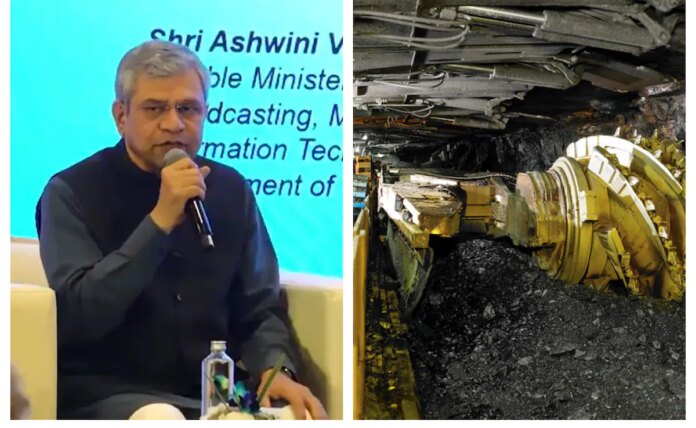
On Wednesday, the Union Cabinet of India cleared a Rs 37,500 crore support scheme for coal and lignite gasification. Union Information & Broadcasting Minister Ashwini Vaishnaw said the plan could crowd in Rs 3 lakh crore of investments.
The timing is not accidental. Oil supply chains are under stress due to the Iran conflict. The Reserve Bank of India has warned that fuel prices may rise if the war drags on.
As New Delhi looks to secure supply chains, it is also chalking out a long-term strategy to reduce energy dependence. In its search for energy sources, the government has decided to turn domestic coal (found in abundance) into gas, chemicals, and fuels that India currently imports at a high cost.
What Is Coal Gasification?
Contrary to what the name of the process suggests, coal gasification does not burn coal. It heats crushed coal with limited oxygen and steam at very high temperature and pressure.
This produces syngas – mainly carbon monoxide (CO) and hydrogen (H₂). Syngas can then be converted into:
- Methanol
- Ammonia
- Urea
- Synthetic Natural Gas (SNG)
- Hydrogen
- Liquid fuels and chemicals
In effect, coal becomes a substitute for imported natural gas and petrochemical feedstock.
Coal Gasification: Why This Matters?
India’s import bill for replaceable products such as LNG, methanol, ammonia, ammonium nitrate and others was Rs 2.77 lakh crore in FY25. Coal gasification directly targets this bill.
| Product | Import dependence | Why it matters |
| LNG | 50% | Power, city gas, industry |
| Urea | 20% | Fertilizers |
| Ammonia | 100% | Fertilizers, chemicals |
| Methanol | 80-90% | Chemicals, fuels |
It is worth mentioning that back in 2024, the Ministry of Coal began India’s first underground coal gasification pilot in Jharkhand to tap such reserves. This project also shows promise because of the scale of India’s coal advantage:-
- Coal resources: 401 billion tonnes
- Lignite: 47 billion tonnes
- Annual coal use: 1 billion tonnes
- Coal share in primary commercial energy: 55%+
- Coal share in power generation: 72%
- Coal production FY25: 1,047.5 million tonnes
Significantly, around 40 per cent of India’s coal is deep-seated and hard to mine. And gasification can unlock this. However, gasification plants are capital-intensive and need long visibility.
Coal Gasification: India’s 2030 Target
India wants 100 million tonnes per annum (MTPA) of coal gasification by 2030. This builds on earlier steps:
2018: Talcher coal gasification-based fertiliser announcement
2020: Incentives in commercial coal mining auctions
2021: Roadmap for coal-based hydrogen
Jan 2024: Rs 8,500 crore support for 8 projects
May 2026: The new Rs 37,500 crore expansion push
Lessons From Other Countries
| Country | What worked |
| China | 70% methanol and >90% ammonia from coal gasification; global methanol leader |
| Indonesia | $2.3 bn plant to cut LPG imports |
| Japan | Advanced IGCC, clean coal R&D after Fukushima |
| United States | Early attempts, limited commercial success |
China’s example shows how coal can replace imported gas in chemicals at scale. Notably, India’s Adani Group is working on a Rs 70,000 crore coal gasification plant in Nagpur this year. The plant will produce syngas, ammonia, and hydrogen.
Coal Gasification: Is It Green?
Gasification is still coal-based. But it is more efficient and cleaner than direct burning. It also enables carbon capture more easily at the syngas stage. At the same time, India is rapidly expanding clean energy.
- FY26: 57.5 GW net capacity added
- 95% of additions were renewables (incl. large hydro)
- Total capacity: 533 GW
- Renewables share: 52%
- 151 GW under construction
- Storage tenders picking up pace
(Data: Council on Energy, Environment and Water Green Finance Centre)
Coal gasification, therefore, is being positioned as import substitution for chemicals and gas, not as a rollback of renewables.
Another Parallel Bet: Geothermal Energy
A recent study by Project InnerSpace and the Council on Energy, Environment and Water finds India holds:
| Use | Technical potential |
| Industrial heat | 11,000 GW |
| Cooling | 1,500+ GW (30-40% power cut) |
| Electricity | 450 GW |
States with promise: Gujarat, UP, West Bengal, Telangana, Maharashtra, Andhra Pradesh. Pilot projects like the Tapri geothermal cold storage in Himachal show early movement.
(With inputs from Amod Prakash Singh)