
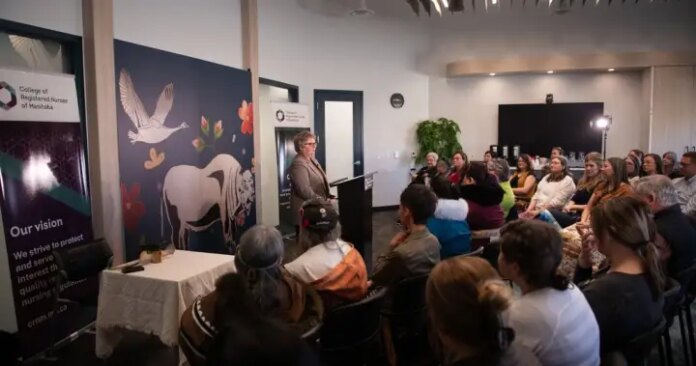

Manitoba’s nursing regulator publicly apologized on Wednesday for its role in discriminating against First Nations, Inuit and Métis people in the health-care system.
The College of Registered Nurses of Manitoba hosted a ceremony including Indigenous advocacy groups, health-care organizations and other regulatory partners on the same day it says the province has proclaimed Indigenous Nurses Day.
“To all First Nations, Inuit and Métis, we affirm our deep sorrow for the harms that you and your ancestors have experienced, and the intergenerational effects that our actions and inactions have caused or contributed to. We realize we have much work to do, and that an apology alone is not enough to affect change,” said Deb Elias, the regulator’s registrar.
Elias went on to say that the apology is “long overdue” and that despite there being ample documentation of systemic racism affecting Indigenous patients and nurses working in the system, the college has failed to address the issues with the level of urgency required to make change.
“(The apology) is the first step to acknowledging essentially the truth of what’s happened and what continues to happen, knowing that we need to have concrete actions moving forward,” Elias later said in an interview with The Canadian Press.
The college’s role is to ensure that the more than 15,200 registered nurses and nurse practitioners in the province are qualified to provide safe and ethical care.

Get weekly health news
Receive the latest medical news and health information delivered to you every Sunday.
Elias said these health-care workers have significant power and influence in the health system, and they should be providing inclusive and culturally safe care.
Research has shown that systemic racism has led to barriers in care and some patients choosing not to seek medical help. In some cases, it has resulted in fatalities.
Brian Sinclair, an amputee, died in 2008 after waiting 34 hours in a Winnipeg emergency room. An inquest into the First Nations man’s death found that medical staff assumed he was intoxicated. A report issued by a group of doctors later said his death was a result of racism.
The college created an Indigenous advisory group last fall to help develop a reconciliation action plan that would include adding more Indigenous staff and voices to its operations.
Elias said the college hopes to release the plan by the end of this year.
She said the college has heard from non-Indigenous nurses that there is an appetite for more training on First Nations, Inuit and Métis culture and traditional healing practices, and that the regulator is willing to push the envelope on this.
The regulatory body has also heard from some Indigenous nurses who have felt discriminated against in the public system and have chosen to work within their own communities, where they feel more safe.
“Today was emotional for many of us,” said Caroline Chartrand, a senior nurse adviser at the health organization Keewatinohk Inniniw Minoayawin. “As First Nations nurses, we have been advocating for change, cultural safety and accountability for a very long time.”
First Nations groups commended the apology but said it must also lead to concrete change.
“We are here to ensure this moment results in meaningful system change that protects First Nations people from further harm and creates accountability across health-care regulation,” said Michelle Monkman, interim chief executive officer of Keewatinohk Inniniw Minoayawin. “Public health and safety must benefit everyone equally, including First Nations citizens.”
The apology should also encourage the wider health system to learn about shared history between Indigenous and non-Indigenous people and the effects of systemic racism on the well-being of First Nations people, said Monkman.
The Assembly of Manitoba Chiefs said the apology is an important acknowledgment of First Nations people’s experiences within health-care systems and institutions in the province.
The group said it’s important that there is support for First Nations nurses, health-care professionals and students.
“Reconciliation is not a single moment or statement,” said Grand Chief Kyra Wilson.
“It is ongoing work grounded in truth, accountability and building relationships based on respect.”
© 2026 The Canadian Press