

On May 11, 1998, in the searing heat of the Rajasthan’s Thar Desert, India crossed a strategic threshold that permanently altered its place in global politics. At Pokhran, underground nuclear devices were detonated in what came to be known as the Shakti series of tests. With that act, India declared itself a nation possessing nuclear weapons, stepping out of decades of deliberate ambiguity and into an overtly nuclear future. With that massive masterly stroke that echoed across the world, India secured its sovereignty and ensured that hence forth no global power could bully New Delhi into grovelling.
The moment was historic, but it was not abrupt. It had deep roots that stretched back nearly a quarter century earlier to the same desert sands. On May 18, 1974, coinciding with Buddha Purnima, India conducted what it officially described as a ‘Peaceful Nuclear Explosion’, code named ‘The Laughing Buddha’. Then Prime Minister Indira Gandhi had emphasised its non-military intent, but the message to the world was unmistakable. India had demonstrated mastery over nuclear explosive technology.
Advertisement – Scroll to continue
That single test set in motion a long era of sanctions, technology denial regimes and diplomatic isolation. India was put in the nuclear dog house, advanced equipment was denied, nuclear cooperation shut down, and India was placed firmly outside the global nuclear order dominated by the Nuclear Non Proliferation Treaty (NPT), a pact India rejected as discriminatory. For years, the country paid a heavy economic and technological price for asserting its strategic autonomy.
Yet those very constraints shaped the character of India’s scientific and strategic journey. Cut off from international supply chains, Indian scientists and engineers had little choice but to innovate indigenously. What followed over the decades was the quiet building of a vast technological ecosystem, spanning nuclear energy, missiles, space and advanced materials.
The culmination of that journey came in May 1998. The Shakti tests were conducted under the leadership of Prime Minister Atal Bihari Vajpayee. In a letter to world leaders soon after the tests, Vajpayee declared that India was now a nuclear weapon state, stressing that the decision was driven by national security considerations and a deteriorating regional environment. He also underlined India’s continued commitment to restraint and responsible behaviour.
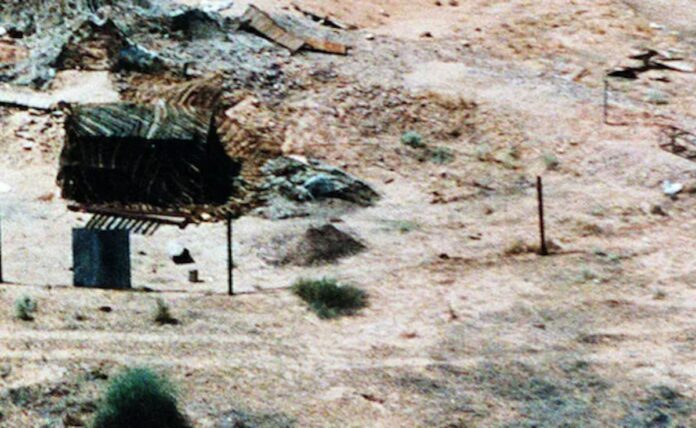
Crater and debris at the Shakti-4KS nuclear site after a nuclear device was detonated underground on May 13.
The global response was swift and punitive. American President Bill Clinton famously stated regarding a potential response to nuclear tests by India in May 1998, “We’re going to come down on those guys like a ton of bricks”. Sanctions were imposed yet again, financial assistance was curtailed, and voices predicting India’s isolation grew louder. But something had fundamentally changed. India had crossed a point of no return. Strategic deterrence, once only implicit, had been made explicit.
This is where history offers a striking contrast with present day events in West Asia. As the world watches tensions around Iran’s nuclear programme escalate, with threats of more military strikes and bunker buster bombs aimed at nuclear facilities and handing over of enriched uranium, many Indian experts argue that had India not taken its own hard decisions in 1974 and 1998, it might well have faced similar coercive pressure as Iran is facing. One has seen similar or worst fates for Iraq and Libya. That North Korea has escaped from such harsh kinetic retribution is also probably because it exploded a nuclear weapon.
The rule book would likely have been the same. Suspicion, sanctions, sabotage and ultimately the threat of force. Imagine for a moment if India had remained perpetually vulnerable, its nuclear facilities exposed to external intervention. Picture Bhabha Atomic Research Centre (BARC), Indira Gandhi Centre for Atomic Research (IGCAR) or other critical installations becoming targets under the justification of preventing proliferation. That scenario, experts argue, was decisively shut off by India’s assertion of strategic capability in 1998.
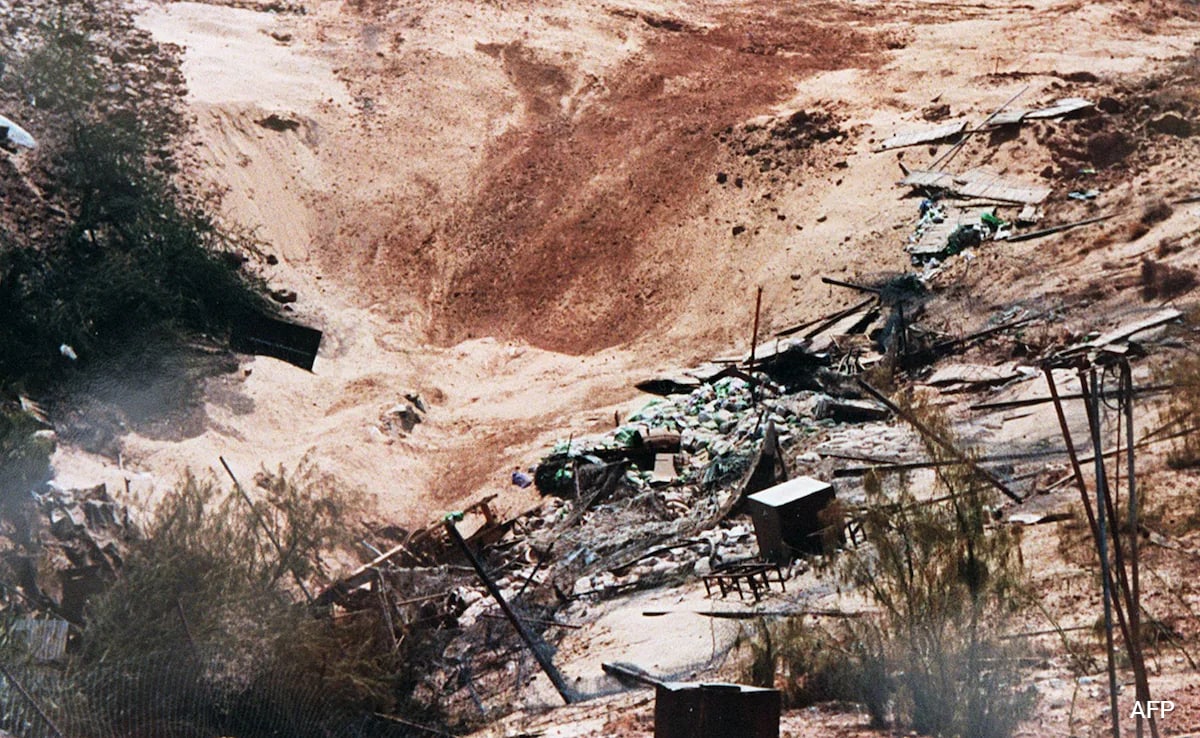
Crater and debris at the Shakti-1 nuclear site after a nuclear device was detonated underground on May 11.
Just as critical as the tests themselves was what followed thereafter. Nuclear capability alone did not pull India into the international mainstream. That required sustained diplomacy of a very high order. This was demonstrated most clearly under Prime Minister Manmohan Singh, when India and the United States negotiated the landmark Indo US Civil Nuclear Agreement.
The negotiations were long, politically fraught and diplomatically complex. They culminated in the signing of the so called 123 Agreement, named after the relevant section of US law, and India’s subsequent waiver from the Nuclear Suppliers Group in 2008. For the first time since 1974, India was allowed to engage in global nuclear commerce without joining the NPT as a non-nuclear weapon state. Under Prime Minister Narendra Modi’s stewardship of The SHANTI Act, it is now opening doors for western nuclear energy companies to set up atomic plants in India.
Prime Minister Manmohan Singh had repeatedly emphasised that the agreement recognised India as a responsible nuclear power with an impeccable non-proliferation record. He argued that it brought India back into the nuclear mainstream while fully safeguarding its strategic programme. The deal was not just about fuel and reactors, it was about legitimacy, trust and acceptance.
Equally important was the evolving relationship between India and the United States. From estrangement and mutual suspicion during the Cold War, the two democracies moved towards strategic partnership. Nuclear reconciliation became the cornerstone of a broader convergence that now spans defence, technology, space and geopolitics.
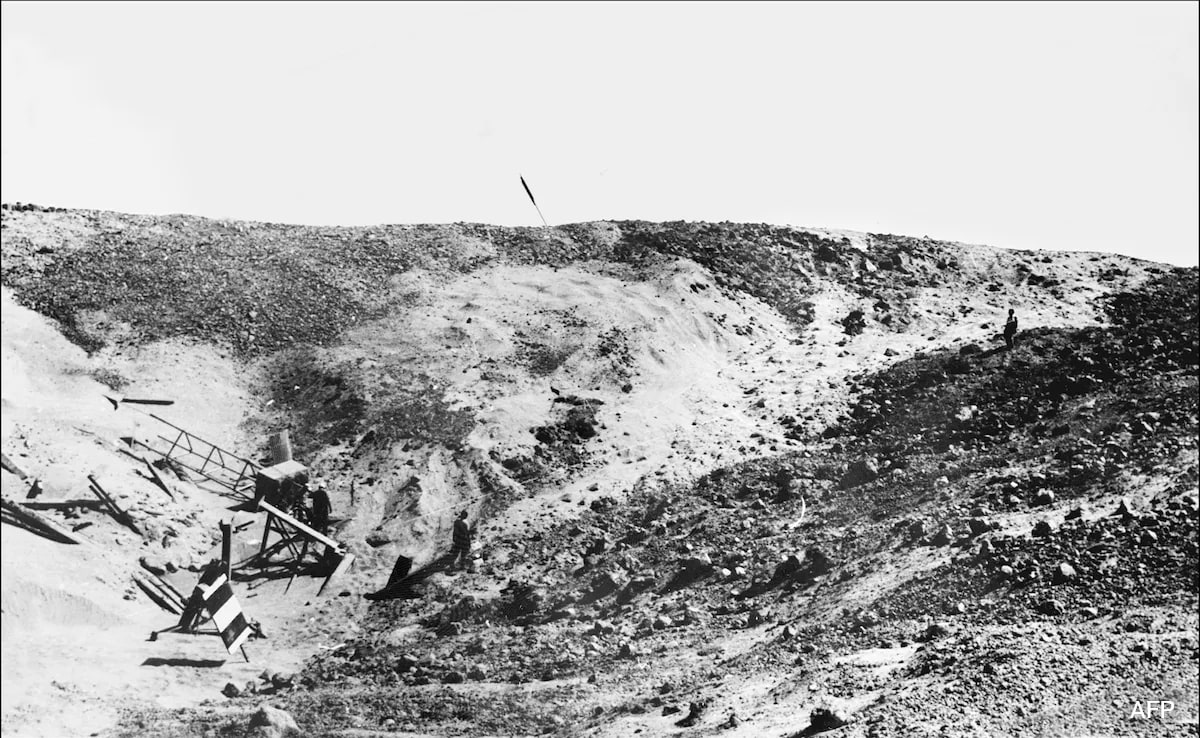
The site of the first Indian underground nuclear test conducted 18 May 1974 at Pokhran.
Prime Minister Narendra Modi has highlighted how confidence in indigenous capabilities underpins India’s foreign policy and national security posture. In multiple addresses, Modi has underscored that India’s strength lies in both technological capability and diplomatic engagement.
Ironically, the technology denial regimes that sought to blunt India’s progress ended up sharpening it instead. Denied access to advanced nuclear technology, India pressed ahead with its three stage nuclear programme, mastering complex breeder reactor technology that even many advanced countries struggled with. The development of fast breeder reactors became central to India’s long term energy vision, particularly for utilising its vast thorium reserves.
In space, the denial of cryogenic engine technology forced the Indian space agency ISRO to build its own. The result is today visible in reliable heavy lift launch vehicles that place satellites in orbit at a fraction of global costs. In missiles, sanctions did not stop India from developing the Agni series, including long range systems that form the backbone of credible deterrence. Including having conducted the successful flight-trial of an Advanced Agni missile with Multiple Independently Targeted Re-Entry Vehicle (MIRV) system from Dr APJ Abdul Kalam Island, Odisha on May 8, 2026. The missile was flight-tested with multiple payloads, targeted to different targets spatially distributed over a large geographical area in the Indian Ocean Region. Today except for the America’s most of the globe can be targeted by India.
What emerges from this arc of history is a powerful lesson in techno diplomacy. Science alone was not enough, diplomacy alone would not have sufficed. It was the fusion of scientific resolve, political will and patient negotiation that safeguarded India’s strategic autonomy.
On the anniversary of Pokhran, the relevance of these choices is stark. As global powers debate red lines and military options elsewhere, India stands shielded not by chance but by conscious decisions taken over decades. The country owes a debt to its nuclear scientists who worked in isolation, its diplomats who fought uphill battles in global capitals, and it’s prime ministers who bore the political risks of controversial choices.
Had India deferred, dithered, hesitated or outsourced its security, history may have been far less forgiving.