
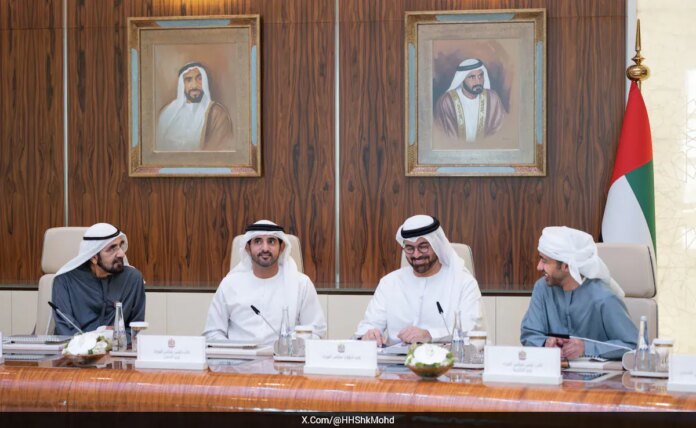

The United Arab Emirates has announced a landmark plan to run half of all its government services and operations using autonomous artificial intelligence, in a move that would make it the first country in the world to govern at this scale through AI systems, according to Khaleej Times.
Sheikh Mohammed bin Rashid Al Maktoum, Vice President and Prime Minister of the UAE and Ruler of Dubai, announced that within two years, 50 per cent of the country’s government sectors, services, and operations will run on Agentic AI.
The initiative was launched under the directives of UAE President Sheikh Mohamed bin Zayed Al Nahyan and aims to position the UAE as the first government globally to operate at this scale using autonomous AI systems.
What is Agentic AI?
Unlike conventional AI tools that assist humans, agentic AI systems are capable of executing tasks and managing processes with minimal human intervention, marking a move beyond conventional digital government platforms. Under the new model, AI agents will move from supporting roles to actively managing and delivering services, embedded across workflows and able to carry out tasks, make decisions, and respond to requests in real time.
Speaking on social media, Sheikh Mohammed described the shift as a fundamental change in how the country operates. “AI is no longer a tool. It analyses, decides, executes and improves in real time,” he said, adding that it “will become our executive partner to enhance services, accelerate decisions, and raise efficiency.”
Under the directives of the President of the UAE, we launch a new government model. Within two years, 50% of government sectors, services, and operations will run on Agentic AI, making the UAE the first government globally to operate at this scale through autonomous systems.
AI… pic.twitter.com/53OQLe7RXl
— HH Sheikh Mohammed (@HHShkMohd) April 23, 2026
What It Means for Residents
For residents, this changes the experience from navigating systems to simply requesting outcomes, with the complexity handled behind the scenes.
The project aims to reduce operational costs, boost productivity, and provide faster and more efficient services by redesigning government policies, processes, and procedures based on AI capabilities, enabling smart systems to perform tasks proactively and accurately.
Who Is in Charge?
According to Khaleej Times, implementation of the initiative will be overseen by Vice President Sheikh Mansour bin Zayed Al Nahyan, with a task force led by Cabinet Affairs Minister Mohammad Al Gergawi monitoring execution. The project will be rolled out in phases across ministries and federal entities, with continuous performance assessments guiding wider adoption.
Sheikh Mohammed also said that ministers, directors-general, and heads of federal entities would be assessed over the next two years based on their ability to keep pace with the transformation, including how quickly they implement new standards and adopt AI tools.
Building on Two Decades of Digital Reform
In 2010, the UAE government transitioned to e-government and digitalised essential services. In 2013, the Smart Government initiative was launched, redefining the concept of government service by transferring it to mobile phones. By 2015, a large proportion of federal government services had become available through digital channels, supported by an advanced infrastructure that includes electronic payment systems and a unified digital identity system, most notably the UAE Pass platform, which has more than 13 million users.
The country also appointed the world’s first Minister of State for Artificial Intelligence in 2017 and launched its AI Strategy 2031. A central pillar of the strategy is workforce transformation. All federal employees will undergo training to develop proficiency in AI, with the goal of building one of the world’s most capable AI-enabled government workforces.