

New Delhi:
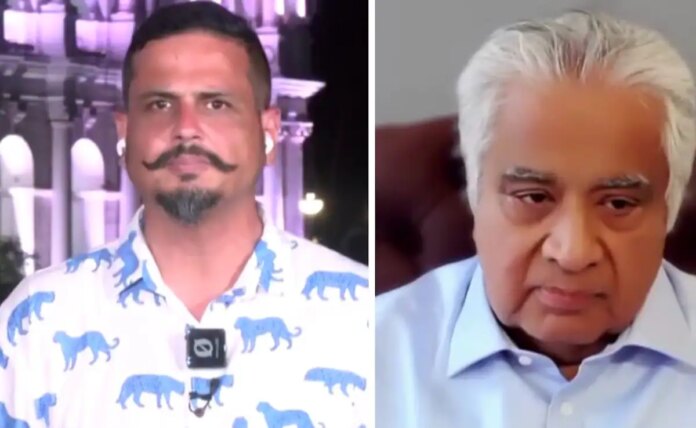
Senior lawyer and former Solicitor General Harish Salve has told NDTV that Tamil Nadu Governor Rajendra Arlekar is acting well within constitutional bounds in asking TVK chief Vijay to show he has the numbers to form government.
What is the problem with supporters of Vijay simply putting their backing in writing, Salve said, referring to the latest standoff over gubernatorial discretion that began after Vijay’s TVK, even as the single-largest party, was not yet invited to form the government.
“Single-largest party is not what the Constitution talks about. Nobody has a right to be called to form the government. What our Constitution says is you must form a government which enjoys the confidence of the legislature,” Salve told NDTV.
He said the political class and a fair section of public opinion have collapsed “single-largest party” and “right to govern” into the same idea, adding the governor’s obligation is not just about numbers but the prospect of a stable government.
Salve said he doesn’t know the terms of what the governor had asked Vijay for.
“If he has asked for more than just Vijay’s word, some more assurance, I think he’s within his bounds. If he has asked Vijay to physically produce 50 per cent plus, he’s obviously perhaps erring. But I don’t think that’s what he has asked for,” the senior lawyer told NDTV.
The governor asking for something more durable than just a verbal commitment is not overstepping, he said.
“If the governor says ‘I need something more than just your word for it, get me signatures or get me a little more certainty’, if that’s what the governor’s saying, I think it’s within his discretion,” Salve said.
But anyone can also raise a point about the fractured mandate, he said.
“One person may say, ‘look, this man has captured the heart of the state, call him and give him a shot’. Another person may say, ‘yes he has, but seeing the fractured politics of the state, can I have something more than just his word for it?’ Both are equally plausible.”
Salve recalled Maharashtra’s Shiv Sena case as an example of the Supreme Court’s own interpretation of the matter. When a governor there had called the legislature to prove majority, the Supreme Court had asked why he was in such a hurry.
“That itself shows that different situations may have different solutions,” Salve said.
On whether Vijay should have met the governor as the single-largest party rather than as part of a coalition, Salve said, “A single-largest party is called when there is a probability of forming the government.”
But in its absence, a governor could in theory recommend President’s Rule rather than invite a government that may not survive its first floor test, Salve said.
He said whenever a constitutional institution – court, Election Commission, governor – does something politically inconvenient, it gets accused of acting on someone else’s diktat.
“We have to stop this bad habit. This is coming to us from across the borders. It’s a transatlantic habit. If a constitutional institution does what I don’t like, the constitutional institution be damned… We must bring back some civility into our political discourse.”
He also disagreed with the Supreme Court’s judgment in the Shiv Sena case. “I personally, sharply differ. But that’s the Supreme Court. That’s its judgment until it is overturned. This is my view.”
Though Vijay’s Tamilaga Vettri Kazhagam (TVK) shattered the decades-old DMK-AIADMK duopoly by winning 108 seats, it could not reach the halfway mark of 118 with the Congress’s support of five seats. The Tamil Nadu assembly has 234 seats.